1. Introduction: Understanding Stroke Rehabilitation and Recovery
Recovering after a stroke can be a gradual process, and every person’s rehabilitation journey is different. A stroke can affect movement, balance, coordination, strength, speech, memory and the ability to perform everyday activities. For patients and caregivers, understanding what rehabilitation involves can make the recovery process easier to navigate.
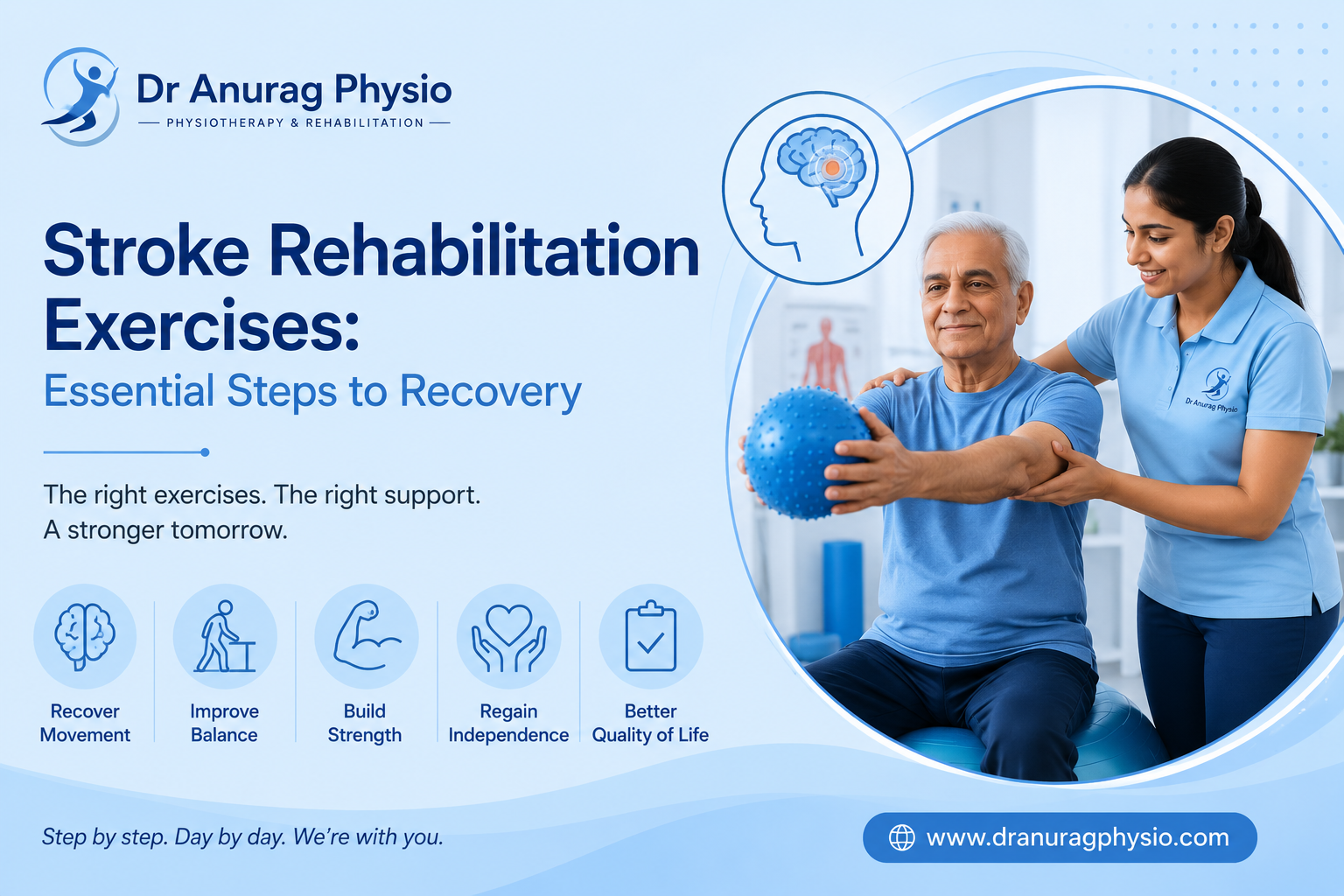
Stroke rehabilitation exercises are one part of a broader rehabilitation program. Depending on the individual’s needs, rehabilitation may focus on improving walking, balance, arm and hand function, strength, coordination and independence with daily activities.
It is important to understand that there is no single exercise routine that is appropriate for every stroke survivor. The type and intensity of exercise depend on factors such as the part of the body affected, the person’s current abilities, medical condition, fatigue and rehabilitation goals.
For families in Mahadevpura and other parts of Bangalore, access to appropriate rehabilitation can be an important consideration after discharge from hospital. Physiotherapy may become part of continuing recovery when it is clinically appropriate.
Stroke recovery can also change over time. A person may make progress in one area while continuing to need support in another. Rehabilitation therefore often involves repeated assessment and gradual progression rather than expecting immediate results.
The American Stroke Association describes stroke rehabilitation as an important part of recovery and notes that rehabilitation can help survivors relearn skills affected by stroke and adapt to changes in their abilities.
Book Appointment
2. What Are Stroke Rehabilitation Exercises?
Stroke rehabilitation exercises are therapeutic activities used as part of rehabilitation to help an individual work on physical functions affected by a stroke.
Depending on the person’s needs, rehabilitation may address:
- Muscle strength
- Joint movement
- Balance
- Coordination
- Walking
- Arm and hand function
- Transfers and functional movements
- Endurance
- Independence with daily activities
What are common signs that rehabilitation may be needed?
A stroke survivor may experience:
- Difficulty walking
- Reduced balance
- Weakness on one side
- Difficulty using an arm or hand
- Problems coordinating movements
- Difficulty getting up from a chair
- Reduced confidence during movement
- Difficulty performing everyday activities
These problems do not mean that every patient needs the same exercises.
Why does individual assessment matter?
A person recovering from a stroke may have weakness, altered sensation, balance problems or other limitations. An exercise that is appropriate for one person may be unsuitable for another.
A rehabilitation professional may therefore assess:
- Current mobility
- Muscle strength
- Balance
- Coordination
- Walking ability
- Functional independence
- Fatigue and exercise tolerance
Practical precautions for patients and caregivers
When supporting stroke exercises, consider:
- Follow the rehabilitation plan provided by the treating team.
- Avoid introducing difficult exercises without professional guidance.
- Keep the exercise environment free from avoidable trip hazards.
- Use appropriate support when recommended.
- Allow adequate rest if fatigue develops.
- Stop and seek professional advice if an exercise causes concerning symptoms.
- Do not compare one person’s recovery with another’s.
The objective is not simply to complete more exercises. Rehabilitation should focus on meaningful improvements in movement and everyday function.
3. Types of Stroke Rehabilitation and Exercise Approaches
Stroke rehabilitation can involve several approaches depending on the person’s impairments and goals.
A. Non-Surgical and Conservative Rehabilitation
Most physical rehabilitation after stroke is non-surgical.
Strength and Movement Training
Appropriate strengthening exercises may help address weakness and improve the ability to perform functional activities.
Balance Training
Balance rehabilitation may be relevant for people who have difficulty standing or walking safely.
Walking and Mobility Training
Rehabilitation may work on:
- Standing
- Transfers
- Walking
- Turning
- Negotiating everyday environments
Arm and Hand Rehabilitation
Some patients need targeted rehabilitation for reaching, grasping and other upper-limb functions.
Functional Training
Exercises can be connected to meaningful everyday activities such as getting out of a chair, walking around the home or performing selected daily tasks.
Physiotherapy After Stroke
Stroke physiotherapy may form part of a multidisciplinary rehabilitation program.
The focus may change as the patient progresses.
You can learn more about neurological rehabilitation through Dr Anurag Physio’s Neuro Physiotherapy and Rehabilitation in Bangalore service page.
B. Medical and Interventional Care
Stroke itself requires medical management, particularly during the acute stage.
Depending on the type and cause of stroke, medical treatment may involve medication, monitoring, investigations or procedures. These decisions are made by the appropriate medical team.
Physiotherapy is not a substitute for acute stroke treatment.
Once medically stable, rehabilitation may become an important part of the continuing recovery process.
For patients requiring broader rehabilitation support, see the Physiotherapy Services in Bangalore page.
4. What Exercises May Be Included During Stroke Recovery?
There is no universal exercise list for every stroke survivor. However, rehabilitation may include activities addressing different functional areas.
Walking Exercises
For appropriate patients, walking rehabilitation may focus on:
- Weight shifting
- Standing control
- Step practice
- Walking pattern
- Turning
- Functional mobility
The level of support required depends on the patient’s ability.
Balance Exercises
Balance rehabilitation may involve controlled activities designed to improve stability during sitting, standing or movement.
Arm and Hand Exercises
Depending on the person’s abilities, rehabilitation may work on:
- Reaching
- Controlled arm movement
- Grasping
- Releasing objects
- Functional hand use
Leg Strengthening
Appropriate strengthening may help improve functional activities such as standing, transferring and walking.
These activities should be selected according to the person’s assessment rather than copied from an online exercise list.
5. Can Stroke Recovery Exercises Be Done at Home?
Home-based rehabilitation may be appropriate for some patients.
Stroke recovery exercises performed at home should ideally form part of a rehabilitation plan developed for that individual.
A safe home environment may involve:
- Removing loose rugs and unnecessary obstacles
- Keeping commonly used items within safe reach
- Ensuring adequate lighting
- Using prescribed mobility aids correctly
- Following the recommended exercise schedule
- Having appropriate supervision when required
Caregivers should not physically force a patient’s movement or attempt advanced exercises without instruction.
For patients who have difficulty travelling to a clinic, home-based physiotherapy may be an option depending on clinical requirements and service availability.
6. How Does Physiotherapy Help After a Stroke?
Physiotherapy after stroke can focus on physical functions affected by the neurological event.
Depending on the patient’s needs, rehabilitation may address:
- Strength
- Balance
- Walking
- Transfers
- Coordination
- Mobility
- Functional independence
A physiotherapist may reassess the patient periodically and modify exercises as abilities change.
Stroke recovery physiotherapy should therefore be viewed as a progressive process rather than a fixed set of exercises.
Rehabilitation may also involve other professionals depending on the patient’s needs, including doctors, occupational therapists, speech and language therapists, psychologists and other members of the healthcare team.
7. How Long Does Stroke Rehabilitation Take?
There is no single recovery timeline for everyone.
The duration of stroke rehabilitation can depend on:
- Severity of the stroke
- Area of the brain affected
- Initial functional limitations
- Age and general health
- Other medical conditions
- Ability to participate in rehabilitation
- Type of impairments
- Rehabilitation goals
- Response to treatment
Some patients may need intensive rehabilitation initially, followed by a longer period of outpatient or home-based rehabilitation.
Recovery can continue over time, although the pace may change.
Instead of focusing only on the number of weeks or months, rehabilitation progress can be considered in terms of meaningful functional goals such as improved walking, safer transfers or greater independence.
8. Cost and Other Rehabilitation Considerations
The cost of stroke rehabilitation varies considerably between patients.
Factors that may influence the overall cost include:
- Number of physiotherapy sessions
- Severity of functional limitations
- Need for multidisciplinary rehabilitation
- Clinic-based versus home-based sessions
- Duration of rehabilitation
- Need for assistive equipment
- Additional medical consultations
- Diagnostic investigations where clinically indicated
A patient with mild functional limitations may have very different rehabilitation requirements from someone with substantial mobility or communication difficulties.
Costs vary according to individual condition, treatment requirements and provider. Patients should discuss fees and expected services with the healthcare provider before beginning treatment.
Cost should not be the only consideration. Appropriate assessment, qualified professionals, continuity of care and a rehabilitation plan suited to the patient are also important.
Book Appointment
9. Why Consider Dr Anurag Physio for Stroke Rehabilitation?
Dr Anurag Physio provides physiotherapy and rehabilitation services in Bangalore, including neurological rehabilitation.
A patient-first approach to rehabilitation should involve:
Individual Assessment
Treatment begins with understanding the patient’s current functional abilities rather than prescribing the same exercises to everyone.
Progressive Rehabilitation
Exercises and activities can be modified as the person’s strength, balance, mobility and confidence change.
Functional Goals
Rehabilitation should connect exercises with meaningful activities such as walking, transferring or performing daily tasks.
Appropriate Referral
When symptoms or rehabilitation needs require medical or multidisciplinary input, appropriate referral and coordination are important.
Local Access
For families in Mahadevpura and surrounding Bangalore areas, access to an appropriate rehabilitation provider can make continued follow-up more practical.
You can also explore Stroke Rehabilitation Physiotherapy in Bangalore for condition-specific information.
Clinical note: Physiotherapy does not replace neurological or medical care. The appropriate rehabilitation pathway should be determined according to the individual’s clinical condition.
10. When Should You Seek Professional Rehabilitation Advice?
If a stroke survivor continues to experience difficulty with walking, balance, strength, arm or hand use, or everyday activities, a rehabilitation assessment may help identify appropriate next steps.
Professional assessment is particularly important when:
- Mobility has changed significantly.
- The person has repeated balance problems.
- There is difficulty transferring or walking safely.
- Weakness is affecting daily activities.
- The patient is struggling to use an affected arm or hand.
- The caregiver is unsure how to assist safely.
Seek emergency medical care for new stroke-like symptoms
New sudden symptoms such as:
- Facial drooping
- New weakness or numbness
- Sudden speech difficulty
- Sudden vision changes
- Sudden severe dizziness or loss of coordination
can indicate an acute medical emergency. Do not wait for a physiotherapy appointment.
Final Note
Stroke rehabilitation exercises can be an important part of recovery, but rehabilitation should never be reduced to a generic list of exercises.
The most appropriate program depends on the person’s abilities, limitations, medical condition and goals. For some patients, the focus may be walking and balance; for others, arm function, transfers or independence with daily activities may be more important.
If you or someone you care for is recovering from a stroke in Mahadevpura, Bangalore, a professional rehabilitation assessment can help determine appropriate next steps.
Dr Anurag Physio
Mahadevpura, Bangalore
For appointments and rehabilitation enquiries, contact the clinic directly.