1. Introduction: What Is Ultrasound Physiotherapy Treatment?
When people hear the word “ultrasound,” they often think of the imaging test used during pregnancy or to examine internal organs. Ultrasound therapy treatment is different. In physiotherapy, therapeutic ultrasound is a treatment modality that uses sound-wave energy and may be incorporated into rehabilitation for selected musculoskeletal problems.
Patients searching for ultrasound therapy, ultrasound physiotherapy, or therapeutic ultrasound commonly want to know whether this treatment can help with pain, stiffness, muscle problems or sports injuries.
The important point is that therapeutic ultrasound is not a universal treatment for every type of pain. Its usefulness depends on the person’s condition, clinical findings and overall rehabilitation plan. Recent research has found potential benefits for pain in some musculoskeletal conditions, while evidence is less consistent for others. For example, a 2024 systematic review found evidence supporting pain reduction in some knee conditions, while results for shoulder disorders were mixed.
This means ultrasound is best understood as one possible component of physiotherapy, rather than a replacement for assessment, therapeutic exercise or appropriate medical care.
Book Appointment
For patients in Mahadevpura and surrounding areas of Bangalore, understanding what ultrasound physiotherapy actually does can help them have a more informed discussion with a physiotherapist about whether it is appropriate for their condition.
2. What Is Therapeutic Ultrasound?
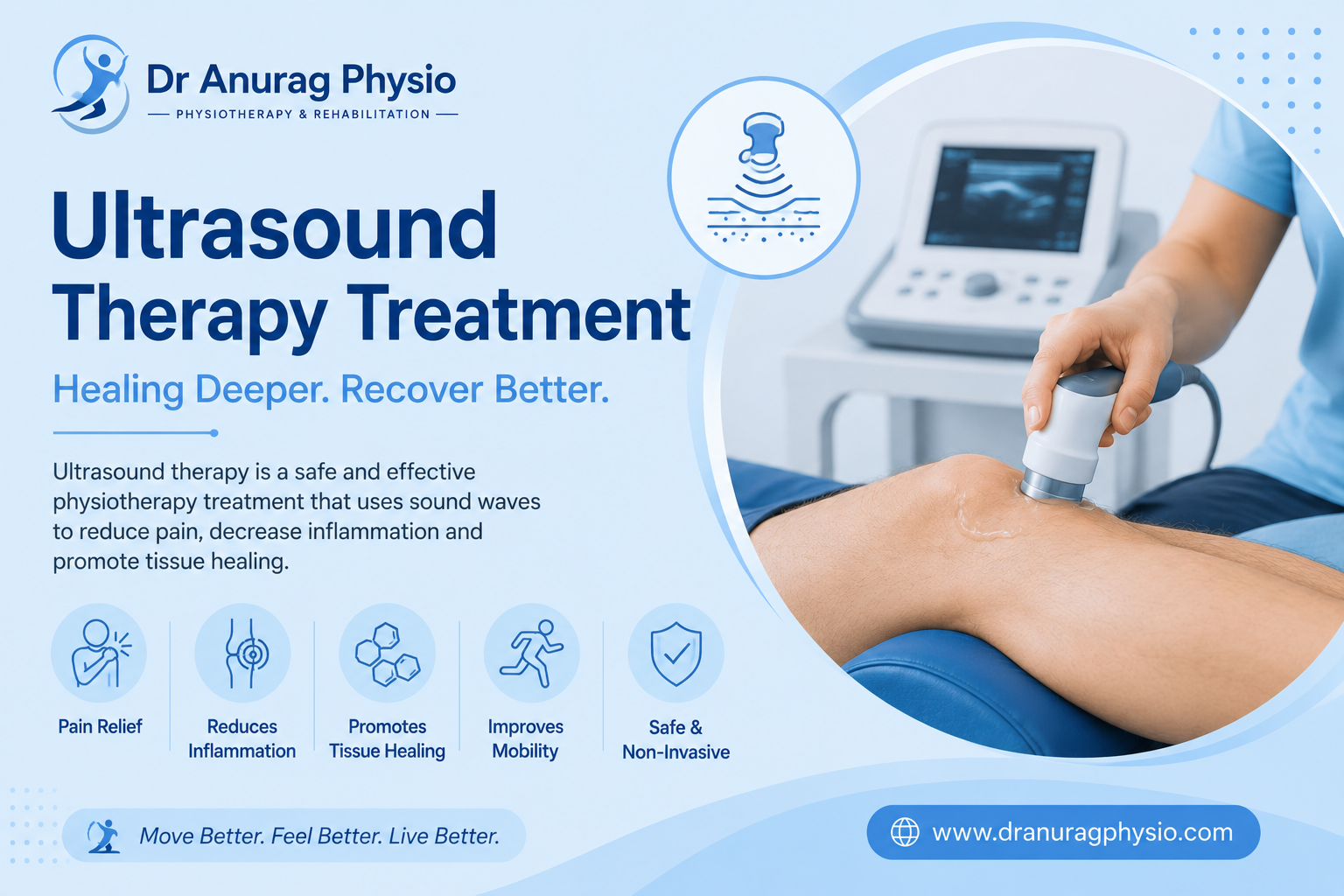
Therapeutic ultrasound uses sound waves at frequencies above the range of human hearing. A physiotherapist applies the treatment to a selected area using specialised equipment.
It is different from diagnostic ultrasound, which is used to create images of structures inside the body.
Therapeutic ultrasound may be considered for selected musculoskeletal problems such as:
- Certain soft-tissue conditions
- Some tendon-related problems
- Selected muscle conditions
- Some joint-related pain
- Certain rehabilitation presentations
- Some scar-tissue management situations
The exact application depends on the patient’s assessment.
How does ultrasound therapy work?
Therapeutic ultrasound can produce mechanical and thermal effects within tissues depending on the settings used.
The intended effects may include changes in tissue temperature or mechanical stimulation. However, the clinical benefit depends on the condition being treated and the treatment parameters.
Patients should therefore avoid thinking of ultrasound as simply “heating the painful area.”
What does an ultrasound therapy session feel like?
During ultrasound physiotherapy, a coupling medium such as ultrasound gel is generally applied to the skin so that the sound energy can be transmitted effectively.
The treatment itself is usually applied to a specific area identified during assessment.
A patient may feel little during treatment, although sensations can vary depending on the settings and area being treated.
Important precautions
Ultrasound therapy is not appropriate for everyone or every body area.
A physiotherapist should know about relevant medical conditions, implants, pregnancy, recent surgery, infection, bleeding, cancer or suspected cancer and other relevant health factors before treatment.
An NHS physiotherapy patient guide lists several situations where therapeutic ultrasound may not be suitable, including treatment over some electronic implants, recent infection or bleeding, certain vascular problems, recent radiotherapy and cancer or suspected cancer over the treatment area.
This is why ultrasound therapy treatment should be selected following appropriate clinical assessment rather than self-administered.
3. What Is Ultrasound Therapy Used For?
The purpose of ultrasound therapy physiotherapy depends on the patient’s condition and rehabilitation goals.
Ultrasound Therapy for Musculoskeletal Conditions
Therapeutic ultrasound has been studied in several musculoskeletal conditions.
For example, a 2024 systematic review and meta-analysis of knee osteoarthritis studies found that therapeutic ultrasound was associated with improvements in pain and function, although the effectiveness varied with treatment parameters.
Research has also investigated ultrasound for plantar fasciitis. One 2024 systematic review of randomised trials reported benefits in pain and functional outcomes, although subsequent research has found less consistent results depending on what ultrasound was compared with.
This highlights an important principle:
Evidence for ultrasound is condition-specific and should not be generalised to every painful condition.
Ultrasound therapy for muscle-related pain
Low-intensity ultrasound has also been studied in myofascial pain syndrome. A 2024 systematic review found reductions in pain compared with sham or no treatment, but also noted substantial variation in ultrasound parameters between studies.
Ultrasound therapy for neck pain
Research has examined therapeutic ultrasound as part of neck-pain rehabilitation. A systematic review found some reduction in pain compared with sham or no treatment but reported uncertainty about additional benefits when ultrasound was combined with other conventional treatments.
Ultrasound should not replace active rehabilitation
For many musculoskeletal problems, rehabilitation may also involve:
- Therapeutic exercise
- Strengthening
- Mobility work
- Functional training
- Manual therapy where appropriate
- Posture and movement education
- Activity modification
The exact combination should be determined by assessment.
For broader physiotherapy information, see Physiotherapy Services in Bangalore.
4. What Are the Benefits of Ultrasound Therapy?
Patients commonly search for ultrasound therapy benefits, but benefits should be discussed in relation to the condition being treated.
Potential benefits may include:
- Providing an adjunct to a broader physiotherapy program
- Helping manage pain in selected musculoskeletal conditions
- Supporting rehabilitation when clinically appropriate
- Providing local treatment to a targeted area
- Potentially improving some functional outcomes in specific conditions
However, ultrasound should not be presented as a guaranteed pain-relief treatment.
A 2024 systematic review covering musculoskeletal disorders found that ultrasound showed benefit for knee disorders but mixed results for shoulder conditions.
This is why a physiotherapist may choose ultrasound for one patient but recommend a different approach for another patient with apparently similar pain.
5. What Is the Difference Between Therapeutic and Diagnostic Ultrasound?
This is one of the most common areas of confusion.
Diagnostic ultrasound
Diagnostic ultrasound is an imaging technique.
It is used by trained healthcare professionals to examine structures inside the body and help with diagnosis.
Therapeutic ultrasound
Therapeutic ultrasound is a physiotherapy modality.
It uses sound-wave energy as part of selected rehabilitation treatments.
In simple terms
Diagnostic ultrasound = imaging
Therapeutic ultrasound = treatment modality
They use ultrasound technology for different purposes and should not be considered interchangeable.
6. What Other Physiotherapy Treatments May Be Used With Ultrasound?
Ultrasound physiotherapy treatment is often considered as one component of a broader rehabilitation plan rather than the entire treatment.
Depending on the condition, physiotherapy may also involve:
Therapeutic Exercise
Exercises may target strength, flexibility, coordination, mobility and functional capacity.
Manual Therapy
Where appropriate, hands-on techniques may be used to address movement restrictions or other musculoskeletal findings.
Mobility and Movement Training
Patients may be taught appropriate movement strategies for everyday activities or sport.
Education
Understanding activity levels, ergonomics, posture and recovery can be an important part of rehabilitation.
Other Physical Modalities
Depending on the clinical situation, a physiotherapist may consider other modalities such as TENS, IFT, heat, cold or other evidence-informed approaches.
The choice should be based on assessment rather than simply selecting the machine that sounds most advanced.
For patients recovering from sports injuries, see Sports Injury Rehabilitation in Bangalore.
For patients with neck symptoms, Neck Pain Physiotherapy at Home in Bangalore may also be relevant.
7. Is Ultrasound Therapy Safe?
For appropriately selected patients, therapeutic ultrasound can be used safely by trained professionals. A 2024 international Delphi consensus specifically addressed safety considerations for physical agent modalities, including therapeutic ultrasound.
However, “safe” does not mean appropriate for everyone.
Before treatment, the physiotherapist should consider:
- Medical history
- Current symptoms
- Treatment area
- Pregnancy status where relevant
- Presence of electronic implants
- Infection
- Bleeding
- Cancer or suspected cancer
- Circulatory conditions
- Recent radiotherapy
- Skin condition
- Other relevant clinical factors
If you have a medical condition or are unsure whether ultrasound is appropriate, tell the physiotherapist before treatment.
8. How Much Does Ultrasound Therapy Cost?
There is no single price for ultrasound therapy treatment.
The overall cost can depend on:
- Initial physiotherapy assessment
- Number of sessions required
- Condition being treated
- Complexity of the rehabilitation plan
- Whether ultrasound is combined with other treatments
- Clinic-based or home-based care
- Additional consultations or investigations where required
A short course of treatment for a straightforward musculoskeletal problem may have different requirements from rehabilitation involving a more complex injury.
Treatment costs vary according to the patient’s condition, assessment findings, treatment plan and healthcare provider.
Patients should ask the clinic about consultation and session fees before beginning treatment.
9. Why Consider Dr Anurag Physio?
Dr Anurag Physio provides physiotherapy and rehabilitation services in Bangalore, including treatment approaches for musculoskeletal and sports-related problems.
The clinic’s physiotherapy approach can involve assessment followed by a treatment plan suited to the patient’s condition rather than automatically using one modality for every patient.
This distinction is important with ultrasound physiotherapy because the appropriateness of the modality depends on the clinical presentation.
Assessment-based care
A physiotherapist can consider:
- Location and nature of symptoms
- Movement limitations
- Muscle strength
- Functional problems
- Activity demands
- Medical history
- Rehabilitation goals
Broader rehabilitation
Where appropriate, ultrasound may be combined with active rehabilitation such as strengthening, mobility work and functional exercises.
Local access
Dr Anurag Physio serves patients in Bangalore, including the Mahadevpura area.
The clinic’s Varthur location also lists ultrasound therapy among the physiotherapy modalities available there.
You can explore Physiotherapy Clinic in Varthur, Bangalore for additional information.
11. When Should You Consider Ultrasound Physiotherapy?
You do not need to request ultrasound simply because you have pain.
A physiotherapy assessment can help determine whether ultrasound therapy is appropriate for your particular condition.
Consider professional assessment when:
- Pain persists despite reasonable activity modification.
- Movement is restricted.
- An injury is affecting daily activities.
- A sports injury is limiting training.
- Pain is recurring.
- You are unsure what treatment is appropriate.
- You have an underlying medical condition that may affect treatment selection.
A physiotherapist may recommend ultrasound, another modality, active rehabilitation or referral to another healthcare professional depending on the findings.
12. Ultrasound Physiotherapy in Mahadevpura, Bangalore
If you are considering ultrasound physiotherapy treatment for an injury or musculoskeletal problem, the first step should be an appropriate physiotherapy assessment.
At Dr Anurag Physio in Mahadevpura, Bangalore, patients can discuss their symptoms and rehabilitation goals with a physiotherapist and determine whether therapeutic ultrasound has a role in their care.
Dr Anurag Physio
Mahadevpura, Bangalore
Phone: +91 91480 17070
For broader rehabilitation information, explore the clinic’s Physiotherapy Services in Bangalore page.
Final Note
Ultrasound therapy treatment can be useful in selected physiotherapy situations, but it is not a universal solution for pain or injury.
The most appropriate rehabilitation plan depends on the condition being treated, clinical findings, treatment goals and the individual’s overall health.
If you are considering ultrasound physiotherapy in Mahadevpura, Bangalore, a professional assessment can help determine whether therapeutic ultrasound is appropriate and how it might fit into a broader rehabilitation plan.
The goal should be appropriate, evidence-informed care—not simply using a treatment modality because it is available.