1. Introduction: Understanding Upper Left Back Pain
Upper left back pain can be uncomfortable, distracting and difficult to interpret. It may appear after a long day at a desk, an unfamiliar workout, lifting something heavy, repetitive activity or an injury. For some people, the discomfort is felt around the shoulder blade; for others, it may spread toward the neck, shoulder or ribs.
When people search for left upper back pain causes, they are often trying to understand whether their symptoms are related to muscles, posture, the spine or something else.
The important point is that pain in this area does not have one universal cause. Musculoskeletal problems such as muscle strain, joint irritation, movement-related problems and posture-related loading can contribute to upper-back symptoms. However, pain in the upper back can sometimes be referred from other structures or medical conditions, so the location of pain alone should not be used to diagnose its cause.
This is especially relevant for people experiencing upper back pain on left side together with chest discomfort, breathing difficulty, neurological symptoms or feeling generally unwell. Such symptoms should be assessed appropriately rather than being assumed to be a simple muscle problem. NHS guidance specifically advises medical assessment for persistent upper-back pain and urgent care for certain symptoms such as chest pain or rapidly worsening severe pain.
Book Appointment
For people living or working around Mahadevapura and other parts of Bangalore, understanding the possible causes and knowing when physiotherapy may be appropriate can make it easier to choose the right next step.
2. What Causes Upper Left Back Pain?
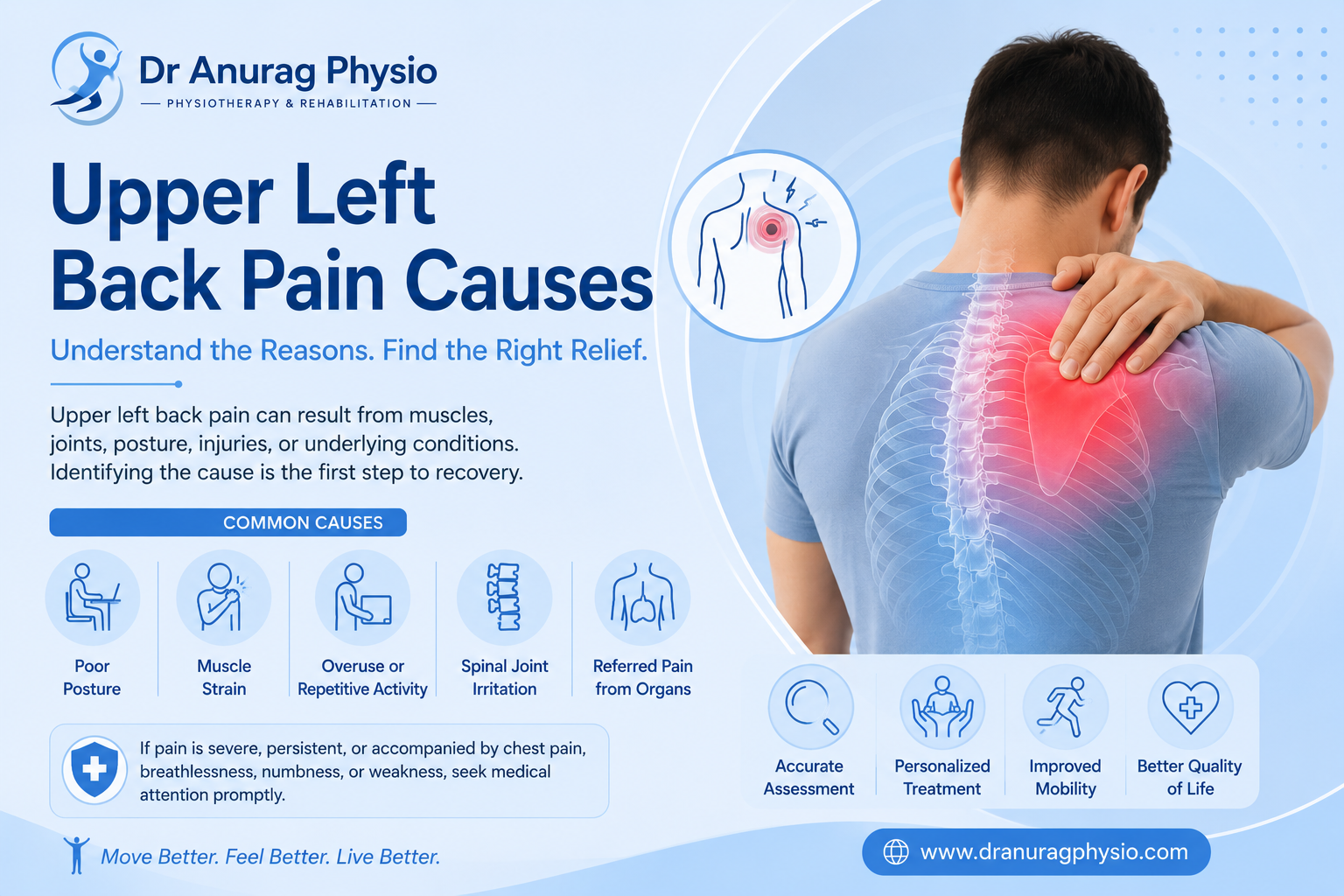
There are several possible upper left back pain causes, and more than one factor can sometimes contribute.
Common musculoskeletal contributors
Possible causes include:
- Muscle strain or overuse
- Repetitive upper-body activity
- Poor tolerance to prolonged sitting or desk work
- Reduced mobility in the upper back
- Neck or shoulder movement problems
- Sports-related strain
- Changes in movement patterns
- Previous injuries
- Certain spinal or joint-related conditions
Upper-back and neck symptoms can occur across the region between the base of the skull, shoulders and shoulder blades. NHS musculoskeletal guidance identifies muscle strain, degenerative changes, trauma, prolonged sitting and other factors among possible contributors.
Why does my left upper back hurt after sitting?
Long periods at a desk can place sustained demands on the neck, shoulders and upper-back muscles. The issue is not necessarily that there is one “bad posture.” Rather, staying in one position for too long may reduce movement variety and increase discomfort.
Regular movement breaks, adjusting your workstation and gradually improving strength and movement capacity may be useful where appropriate.
What about pain under the left shoulder blade?
Some people describe upper left back pain as pain:
- Under the shoulder blade
- Between the shoulder blade and spine
- Around the upper ribs
- Near the back of the shoulder
- Between the neck and shoulder
The exact location can provide useful information during an assessment, but it does not by itself identify the cause.
Other possible causes
Not every case of left side upper back pain is muscular.
Depending on the accompanying symptoms and medical history, pain may sometimes be referred from other areas. For this reason, recurring, unexplained or unusual pain should be assessed rather than self-diagnosed.
3. What Symptoms Can Occur With Upper Left Back Pain?
The experience varies from person to person.
Someone with a musculoskeletal problem may notice:
- Localised aching or soreness
- Stiffness
- Pain with certain movements
- Discomfort after prolonged sitting
- Tightness around the shoulder blade
- Reduced upper-back or shoulder movement
- Symptoms after exercise or lifting
- Pain that changes with position or movement
Some people may also experience discomfort extending toward the neck or shoulder.
However, symptoms such as chest pain, significant breathing difficulty, unexplained weakness or numbness should not simply be attributed to a back problem.
When should you seek medical evaluation?
Seek appropriate medical care if upper-back pain:
- Is severe and starts suddenly
- Is getting worse quickly
- Occurs with chest pain
- Occurs with significant breathing difficulty
- Follows a serious accident
- Is accompanied by weakness or numbness
- Occurs with fever or feeling generally unwell
- Is associated with unexplained weight loss
- Persists despite reasonable self-care
- Interferes substantially with normal activities
NHS guidance recommends medical assessment for persistent upper-back pain and highlights chest pain, serious trauma and neurological or systemic symptoms as reasons for urgent or emergency evaluation depending on the presentation.
4. How Can You Relieve Upper Left Back Pain?
The right approach depends on what is contributing to the symptoms.
For uncomplicated musculoskeletal discomfort, practical measures may include:
- Staying gently active within comfortable limits
- Avoiding prolonged bed rest
- Taking regular movement breaks during desk work
- Gradually returning to normal activities
- Using heat or cold if it provides comfortable symptom relief
- Reviewing workstation ergonomics
- Avoiding sudden increases in exercise volume
- Seeking professional assessment when symptoms persist
NHS guidance for back pain generally encourages maintaining activity and avoiding prolonged periods of bed rest, while exercises and physiotherapy may form part of treatment when appropriate.
What if movement makes the pain worse?
Pain that consistently worsens with particular movements should not automatically be interpreted as evidence of serious damage. However, persistent or significantly worsening symptoms deserve assessment.
A physiotherapist can assess movement, strength, mobility and functional limitations to determine whether rehabilitation is appropriate.
5. Upper Left Back Pain Treatment Options
Treatment should be based on the underlying problem rather than simply the location of pain.
Conservative and Non-Surgical Treatment
For musculoskeletal upper-back problems, upper left back pain treatment may include:
Physiotherapy
- Movement assessment
- Therapeutic exercise
- Strengthening
- Mobility exercises
- Functional rehabilitation
- Manual therapy where clinically appropriate
- Postural and ergonomic education
- Activity modification
- Home exercise planning
The goal is not simply to massage the painful area. A rehabilitation plan may also address strength, mobility, movement tolerance and the activities that contribute to symptoms.
Dr Anurag Physio describes its physiotherapy approach as assessment-based, with treatment customised around age, lifestyle and health condition.
Exercise-based rehabilitation
Depending on the assessment, exercises may focus on:
- Thoracic mobility
- Shoulder-blade control
- Upper-back strength
- Neck and shoulder function
- Core and trunk conditioning
- Gradual return to activity
Exercises should be selected according to the person’s symptoms and physical capacity rather than copied from a generic online routine.
Ergonomic and activity changes
For office workers, useful changes may include:
- Changing position regularly
- Adjusting screen and keyboard height
- Avoiding long uninterrupted sitting
- Taking short movement breaks
- Alternating tasks where possible
Dr Anurag Physio’s home neck physiotherapy service also describes ergonomic advice, mobility, strengthening and functional rehabilitation as possible components of care.
Medical or Interventional Treatment
If the pain is caused by a condition requiring medical treatment, a doctor or appropriate specialist may recommend:
- Diagnostic evaluation
- Medication
- Imaging when clinically indicated
- Specialist consultation
- Interventional treatment in selected circumstances
- Surgery only when clinically appropriate
Surgery is not a routine treatment for ordinary musculoskeletal upper-back pain.
The appropriate pathway depends on the diagnosis.
6. Can Physiotherapy Help Upper Left Back Pain?
For people searching for upper left back pain physiotherapy, physiotherapy may be appropriate when the assessment indicates a musculoskeletal or movement-related contribution.
A physiotherapist may evaluate:
- Spinal and thoracic movement
- Neck mobility
- Shoulder movement
- Muscle strength
- Shoulder-blade control
- Functional movement
- Work and exercise demands
- Previous injuries
- Symptoms during daily activities
The rehabilitation plan can then be adjusted according to the findings.
Physiotherapy may be particularly relevant when:
- Pain is associated with movement
- Symptoms developed after exercise or physical activity
- Neck and upper-back stiffness occur together
- Desk work aggravates symptoms
- Shoulder movement contributes to discomfort
- There is reduced strength or movement tolerance
- Symptoms are affecting sport or daily activities
However, physiotherapy should not delay medical assessment when warning symptoms are present.
For patients who find travelling difficult, Dr Anurag Physio also provides home physiotherapy services in Bangalore for selected musculoskeletal conditions.
7. What Factors Affect Treatment Cost?
The cost of upper left back pain treatment varies depending on the patient’s condition and the care required.
Factors may include:
- Initial assessment
- Number of physiotherapy sessions
- Complexity of symptoms
- Rehabilitation goals
- Whether home or clinic-based treatment is selected
- Need for medical consultation
- Diagnostic tests when clinically indicated
- Additional specialist treatment
There is no appropriate single price for every patient.
Someone with a short-term muscular strain may require a different treatment plan from someone with persistent symptoms, neurological findings or an underlying medical condition.
Treatment costs vary according to the individual’s condition, assessment findings, treatment plan and healthcare provider.
Patients should confirm consultation and session fees directly with the clinic before beginning treatment.
8. Why Consider Dr Anurag Physio?
Dr Anurag Physio provides physiotherapy and rehabilitation services in Bangalore, including musculoskeletal, orthopedic and sports rehabilitation.
The clinic’s website identifies Dr Anurag Gupta as Lead Physiotherapist and describes an approach based on clinical assessment, rehabilitation planning and measurable functional outcomes.
For someone with upper left back pain, an assessment-based approach can help determine whether symptoms appear consistent with a musculoskeletal problem and whether physiotherapy is appropriate.
Assessment before treatment
Rather than assuming every upper-back problem is caused by posture or muscle tightness, the clinician can consider the patient’s:
- Medical history
- Symptoms
- Movement
- Strength
- Activity demands
- Work environment
- Previous injuries
- Rehabilitation goals
Individualised rehabilitation
Treatment may involve exercise, mobility work, strengthening, manual therapy where appropriate and education.
Functional focus
The goal of rehabilitation is not simply to reduce discomfort during the appointment. Where appropriate, treatment can focus on helping the patient return to work, exercise, sport and everyday activities.
Local access
Dr Anurag Physio serves patients in Bangalore, including Mahadevapura and other East Bangalore areas. Its broader physiotherapy services include musculoskeletal and sports rehabilitation.
9. When Should You See a Physiotherapist or Doctor?
A professional assessment can be useful when left upper back pain causes uncertainty or symptoms continue to interfere with daily life.
Consider physiotherapy assessment when:
- Pain is linked to movement or activity
- Symptoms developed after exercise or physical strain
- Upper-back stiffness persists
- Desk work repeatedly aggravates symptoms
- Neck, shoulder and upper-back symptoms occur together
- Pain is affecting exercise, work or daily activities
- Symptoms are not improving as expected
Seek medical assessment rather than relying on physiotherapy alone when:
- Pain is severe or rapidly worsening
- You have chest pain
- You have significant difficulty breathing
- You develop unexplained weakness or numbness
- You feel feverish or generally unwell
- Pain follows major trauma
- There are other symptoms that concern you
NHS guidance specifically identifies pain originating from the top of the back, between the shoulders, as a reason to seek medical assessment if it persists, and provides additional urgent-care guidance for chest pain, neurological symptoms, serious trauma and systemic symptoms.
10. CTA: Upper Left Back Pain Physiotherapy in Bangalore
If you are experiencing persistent upper left back pain in Mahadevapura or elsewhere in Bangalore, an assessment can help clarify whether physiotherapy is appropriate.
Dr Anurag Physio can evaluate relevant movement, strength and functional factors and recommend rehabilitation when clinically suitable.
Dr Anurag Physio
Mahadevapura, Bangalore
Phone: +91 91480 17070