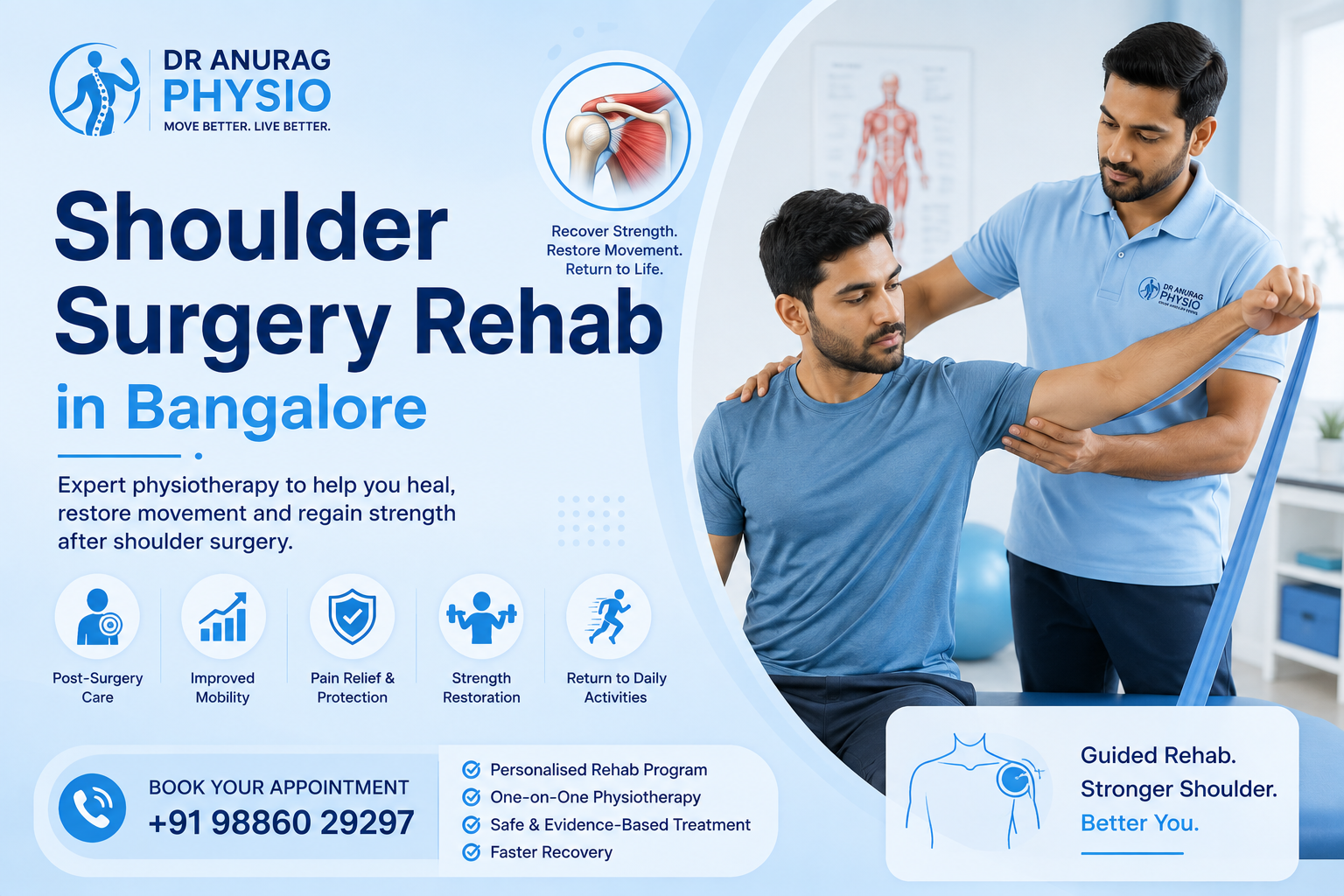
Shoulder surgery can be an important step toward restoring function after an injury or degenerative condition, but surgery is only one part of the recovery journey. Your shoulder may need structured rehabilitation to gradually restore movement, strength, stability and confidence.
If you are looking for shoulder surgery physiotherapy Bangalore, the right rehabilitation program should be based on the procedure you underwent, your surgeon’s precautions, your current symptoms and your functional goals.
Physiotherapy after shoulder surgery may help you progress from protected movement to strengthening and eventually back to everyday activities, work, exercise or sport.
Dr Anurag Physio provides orthopedic and sports physiotherapy in Bangalore, including post-surgical rehabilitation.
Book Appointment
Quick Answer
Shoulder surgery rehabilitation generally progresses through stages rather than following one identical program for everyone.
Depending on your surgery and recovery, physiotherapy may include:
- Pain and swelling management
- Protected shoulder movement
- Range-of-motion exercises
- Muscle activation
- Progressive strengthening
- Scapular control
- Functional training
- Work-related rehabilitation
- Sport-specific rehabilitation
- Return-to-activity planning
Your surgeon’s post-operative instructions should always be followed, particularly regarding movement restrictions, sling use, weight-bearing or resistance limits.
What Is Shoulder Surgery Rehabilitation?
Shoulder surgery rehabilitation is a structured process designed to help restore shoulder function after an operation.
The shoulder has a complex combination of joints, muscles, tendons and stabilising structures. Different operations therefore require different rehabilitation approaches.
Examples include:
- Rotator cuff repair
- Shoulder replacement
- Labral repair
- Bankart repair
- SLAP repair
- Shoulder stabilisation
- Shoulder arthroscopy
- Fracture fixation
- Other orthopedic shoulder procedures
A rehabilitation program should be matched to the tissue that was repaired or reconstructed.
Why Is Physiotherapy Important After Shoulder Surgery?
Following surgery, you may experience:
- Pain
- Swelling
- Stiffness
- Muscle weakness
- Reduced range of motion
- Difficulty using the arm
- Reduced confidence with movement
Physiotherapy after shoulder surgery can help address these problems progressively.
The aim is not simply to move the shoulder as much as possible.
The rehabilitation process needs to balance:
Protection → Healing → Mobility → Strength → Function → Return to activity
Moving too aggressively may be inappropriate after some procedures, while avoiding movement for too long can contribute to stiffness and weakness.
The correct balance depends on the surgical procedure and your individual recovery.
Physiotherapy After Shoulder Surgery Bangalore
Patients searching for physiotherapy after shoulder surgery Bangalore often want to know when treatment should begin and what recovery will involve.
The answer depends on the surgery.
For example, rehabilitation following a rotator cuff repair can be substantially different from rehabilitation after a shoulder replacement or labral repair.
Before beginning or progressing exercises, your physiotherapist may consider:
- Type of surgery
- Date of surgery
- Surgeon instructions
- Tissue healing requirements
- Pain
- Swelling
- Current movement
- Muscle activation
- Functional limitations
- Your activity goals
This information helps determine the safest rehabilitation progression.
Shoulder Physiotherapy Bangalore: What Does Treatment Include?
When searching for shoulder physiotherapy Bangalore, you may encounter different approaches.
A comprehensive rehabilitation program may include:
1. Assessment
Your physiotherapist evaluates your current condition and reviews the surgical information available.
2. Pain and Swelling Management
Appropriate strategies may be used to help you tolerate movement and rehabilitation.
3. Mobility
Shoulder movement is gradually restored according to your surgical restrictions.
4. Muscle Activation
Specific exercises may help restore appropriate muscle activation.
5. Strengthening
Progressive resistance exercises can be introduced when clinically appropriate.
6. Functional Training
Rehabilitation eventually moves toward activities you need to perform at home, work, the gym or during sport.
7. Return-to-Activity Planning
Your final rehabilitation stage should reflect what you want and need to return to doing.
Shoulder Rehabilitation Bangalore: Different Surgeries Need Different Plans
Shoulder rehabilitation Bangalore should never be based on a generic post-surgery exercise sheet.
Rotator Cuff Repair
A repaired tendon needs appropriate protection while healing.
Rehabilitation may initially emphasise protected movement before progressing toward active movement and strengthening.
Shoulder Replacement
Rehabilitation after shoulder replacement focuses on restoring appropriate movement and function while respecting surgical precautions.
Bankart Repair
Following stabilisation surgery, rehabilitation may focus on gradually restoring movement, strength and shoulder control.
SLAP or Labral Repair
The rehabilitation pathway depends on the specific procedure and structures involved.
Shoulder Arthroscopy
Arthroscopy can involve several different procedures, so rehabilitation depends on what was actually performed.
Fracture Fixation
Rehabilitation depends on fracture location, fixation, healing and the surgeon’s instructions.
Post Shoulder Surgery Physiotherapy
Post shoulder surgery physiotherapy should be progressive and procedure-specific.
A typical rehabilitation pathway may include:
Early Phase
Goals may include:
- Protecting the surgical repair
- Managing symptoms
- Maintaining appropriate movement
- Supporting muscle activation
- Following sling or movement restrictions
Middle Phase
The focus can gradually shift toward:
- Active movement
- Strength development
- Shoulder blade control
- Functional movement
Advanced Phase
Depending on the surgery, rehabilitation may progress toward:
- Resistance training
- Overhead activities
- Work-specific tasks
- Gym exercises
- Throwing or sport-specific movements
Not every patient reaches the same exercises at the same time.
Shoulder Surgery Rehab Timeline
Patients often want to know:
“How long will my shoulder take to recover?”
There is no universal timeline.
Recovery can depend on:
- Surgical procedure
- Tissue involved
- Extent of repair
- Age
- Pre-operative strength
- Post-operative stiffness
- Pain
- Complications
- Rehabilitation consistency
- Work requirements
- Sporting demands
For example, a repaired tendon may require a different protection period from a straightforward arthroscopic procedure.
Therefore, rehabilitation should use time plus clinical milestones, rather than time alone.
Shoulder Surgery Recovery: What Should You Expect?
Recovery generally involves gradual changes.
You may work toward:
Better Movement
Restoring appropriate shoulder range of motion.
Improved Strength
Progressively rebuilding shoulder and upper-limb capacity.
Better Shoulder Control
Improving coordinated movement of the shoulder and shoulder blade.
Improved Daily Function
Returning to activities such as:
- Dressing
- Bathing
- Reaching
- Lifting appropriate objects
- Household tasks
Return to Work
Your return-to-work plan depends on the physical demands of your occupation.
Return to Exercise
Gym activities should be gradually reintroduced based on the procedure and your recovery.
Return to Sport
Athletes may require additional strength, power, endurance and sport-specific testing.
Exercises After Shoulder Surgery
The exercises prescribed after surgery depend heavily on the operation.
Potential rehabilitation exercises may include:
Early-Stage Exercises
- Hand and wrist movements
- Elbow movements where permitted
- Gentle shoulder mobility
- Pendulum exercises where prescribed
- Scapular exercises
- Muscle activation exercises
Intermediate Rehabilitation
Progression may include:
- Active-assisted shoulder movement
- Active range-of-motion exercises
- Scapular strengthening
- Rotator cuff strengthening
- Resistance exercises
Advanced Rehabilitation
Depending on the surgical procedure:
- Progressive resistance training
- Overhead strengthening
- Functional lifting
- Throwing preparation
- Sport-specific drills
Do not copy another patient’s shoulder exercise program.
A patient recovering from rotator cuff repair may have different restrictions from someone recovering from shoulder replacement or labral surgery.
Should You Push Through Pain During Rehabilitation?
Not every sensation during rehabilitation means damage is occurring, but significant or worsening pain should not simply be ignored.
Tell your physiotherapist if you experience:
- Increasing pain
- Increasing swelling
- Sudden loss of movement
- New weakness
- Clicking associated with pain
- Instability
- A sudden change after an exercise
Your physiotherapist can determine whether the exercise needs modification or whether further medical evaluation is appropriate.
Shoulder Surgery Physiotherapy: Returning to Work
Returning to work depends largely on your occupation.
Desk-Based Work
You may need to consider:
- Computer positioning
- Keyboard and mouse use
- Sitting duration
- Breaks
- Arm support
Manual Work
A longer rehabilitation period may be needed if your job involves:
- Lifting
- Carrying
- Reaching overhead
- Repetitive arm movements
- Heavy physical work
Your return-to-work progression should follow the restrictions provided by your surgical team.
Returning to the Gym After Shoulder Surgery
Going back to the gym too quickly can place unnecessary load on healing tissues.
Your rehabilitation may progress from:
Basic movement → Light resistance → Controlled strengthening → Functional loading → Sport/gym-specific training
Exercises involving heavy overhead pressing, pulling or lifting may need to be delayed depending on the procedure.
Your physiotherapist can help determine when and how to reintroduce gym exercises.
Returning to Sports After Shoulder Surgery
Athletes often want to know when they can resume their sport.
The answer depends on:
- Type of surgery
- Sport
- Position played
- Shoulder strength
- Range of motion
- Stability
- Endurance
- Power
- Sport-specific skills
A person returning to running may have very different requirements from a swimmer, tennis player, cricketer or overhead athlete.
Return-to-sport rehabilitation should therefore be sport-specific.
Shoulder Physiotherapy Near Me: What Should You Look For?
If you’re searching for shoulder physiotherapy near me, proximity is useful, but clinical suitability matters more.
Consider whether the provider offers:
- Individual assessment
- Post-operative rehabilitation
- Progressive strengthening
- Mobility rehabilitation
- Functional rehabilitation
- Sports rehabilitation
- Return-to-work planning
- Return-to-sport rehabilitation
- Communication with the surgical team when required
When Should You Contact Your Surgeon?
Physiotherapy and surgical follow-up work together.
Contact your surgical team if you experience concerning symptoms such as:
- Sudden severe pain
- New significant weakness
- Major swelling
- Wound problems
- Fever
- Redness or discharge from the surgical site
- Sudden loss of function
- A new injury
Emergency symptoms such as severe chest pain or sudden breathing difficulty require urgent medical attention.
Can Shoulder Rehabilitation Be Done at Home?
Some parts of shoulder rehabilitation can be performed at home when prescribed appropriately.
A home exercise program may include:
- Mobility exercises
- Strengthening
- Scapular control
- Functional exercises
However, some patients benefit from supervised clinic-based rehabilitation, particularly when progressing resistance, functional loading or sport-specific exercises.
The best setting depends on your surgical procedure, stage of recovery and rehabilitation goals.
Why Choose Dr Anurag Physio?
Individualised Rehabilitation
Your rehabilitation program should reflect your surgical procedure, current capacity and recovery goals.
Sports & Orthopedic Focus
Dr Anurag Physio provides sports and orthopedic physiotherapy alongside post-surgical rehabilitation.
Progressive Exercise
Rehabilitation can progress from basic movement to strengthening and functional activity as appropriate.
Functional Recovery
The goal is to help you regain practical use of the shoulder for everyday life, work, exercise or sport.
Bangalore-Based Care
Dr Anurag Physio currently operates centres in Mahadevapura and Varthur, with physiotherapy services available across its stated Bangalore service areas.
Book Appointment
Phone: +91 91480 17070
Meet Dr Anurag Gupta
Dr Anurag Gupta
Lead Physiotherapist | Sports & Orthopedic Rehabilitation
Dr Anurag Physio identifies Dr Anurag Gupta as its lead physiotherapist, with clinical focus areas including orthopedic physiotherapy, sports rehabilitation, musculoskeletal rehabilitation and post-surgical rehabilitation.
The practice currently states 10+ years of clinical experience and 1,000+ successful recoveries on its website. These figures should be verified and updated periodically before publication.
Practice: Dr Anurag Physio
Location: Bangalore, Karnataka
Phone: +91 91480 17070