Having a baby is a major physical change. Even after delivery, your body may need time and appropriate support to recover.
You may notice:
- Lower back or pelvic discomfort
- Abdominal weakness
- Difficulty returning to exercise
- Pelvic-floor symptoms
- Changes in posture
- Pain while lifting or carrying your baby
- Reduced strength or endurance
- Difficulty getting back to normal daily activities
Postpartum physiotherapy Bangalore focuses on helping you recover movement, strength and physical function after childbirth.
Whether you had a vaginal delivery or C-section, rehabilitation should be based on your symptoms, medical history, delivery experience and individual recovery goals.
At Dr Anurag Physio, physiotherapy programs are designed around individual functional needs. Where clinically appropriate, postpartum rehabilitation can include mobility, strengthening, posture, core rehabilitation and a gradual return to activity.
Important: Postpartum recovery is individual. Physiotherapy should complement, not replace, medical or obstetric care when medical concerns are present.
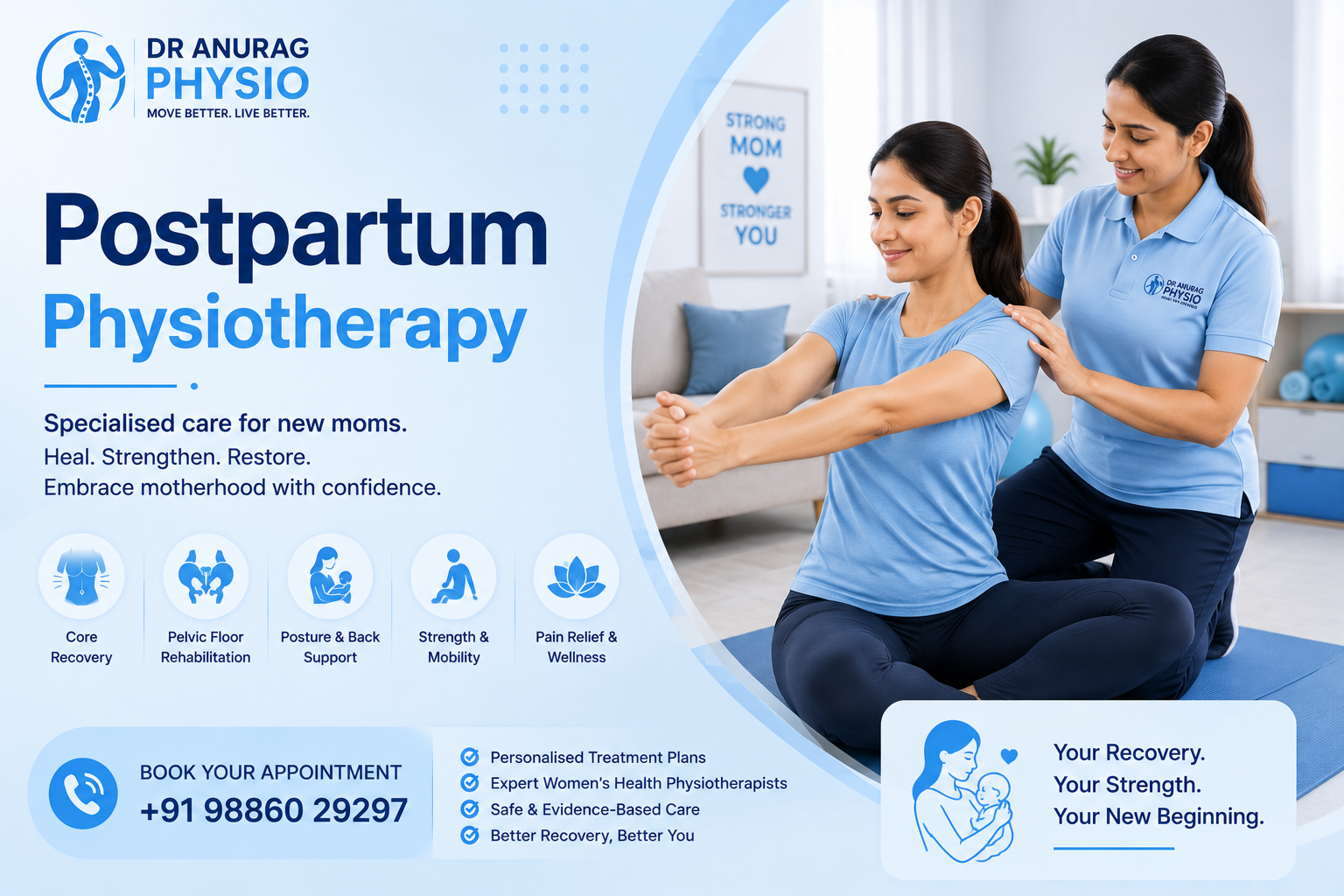
What Is Postpartum Physiotherapy?
Postpartum physiotherapy is physiotherapy provided after childbirth to address physical changes, discomfort, weakness and functional limitations that may occur during pregnancy, delivery and the postpartum period.
It can focus on:
- Core function
- Pelvic-floor rehabilitation
- Strength
- Mobility
- Posture
- Back and pelvic discomfort
- Scar-related rehabilitation where appropriate
- Functional movement
- Return to exercise
Book Appointment
The goal is not simply to “get back in shape.”
A better goal is:
Recover function → Build strength → Restore confidence → Return to meaningful activities
Postnatal Physiotherapy vs Postpartum Physiotherapy
You may see both terms when searching online.
Postpartum Physiotherapy
Usually refers to physiotherapy during the period after childbirth.
Postnatal Physiotherapy
Is another commonly used term for rehabilitation after delivery.
For practical purposes, both terms are frequently used to describe physiotherapy supporting recovery after pregnancy and childbirth.
Therefore, this page targets both:
and
postnatal physiotherapy
without creating separate pages that could compete for the same search intent.
When Should You Start Physiotherapy After Delivery?
There is no single starting date that applies to every new mother.
The appropriate timing depends on:
- Type of delivery
- C-section or vaginal delivery
- Healing status
- Complications
- Pain or other symptoms
- Medical clearance where required
- Current physical function
Some women may benefit from an early assessment focused on basic mobility and recovery, while more intensive strengthening or exercise progression may be introduced later.
After a C-section or complicated delivery, follow your obstetrician’s recommendations regarding wound healing, activity restrictions and exercise progression.
Why Consider Postpartum Physiotherapy?
Pregnancy and childbirth can affect several areas of physical function.
A personalised physiotherapy assessment can help identify problems that may otherwise be overlooked.
Common goals include:
Improving strength
Weakness can develop in the abdominal, pelvic and lower-limb muscles.
Improving mobility
You may have difficulty moving comfortably after delivery.
Supporting pelvic-floor function
Pelvic-floor rehabilitation can be considered when appropriate.
Managing musculoskeletal discomfort
Back, pelvic, neck and shoulder discomfort may affect new mothers.
Returning to exercise
A gradual, structured approach can help you resume physical activity safely.
Improving functional confidence
Everyday activities such as lifting, carrying and caring for your baby may become easier as physical capacity improves.
Common Problems Addressed With Postnatal Physiotherapy
Postnatal physiotherapy Bangalore can be considered when physical symptoms interfere with everyday activities.
Common concerns include:
Lower Back Pain
Back discomfort can persist after pregnancy and may be influenced by changes in posture, lifting and prolonged feeding positions.
Pelvic Discomfort
Some women experience pelvic discomfort after pregnancy or delivery.
Core Weakness
Pregnancy can change abdominal muscle function and trunk control.
Pelvic-Floor Symptoms
Some women experience urinary leakage, pelvic heaviness or other pelvic-floor symptoms after childbirth.
Reduced Strength
Sleep disruption, reduced activity and pregnancy-related physical changes can contribute to reduced physical capacity.
Neck and Shoulder Discomfort
Feeding, carrying and prolonged sitting can place additional physical demands on the upper body.
Difficulty Returning to Exercise
Returning to running, gym training or other activities should be progressive rather than rushed.
Postpartum Pelvic-Floor Physiotherapy
The pelvic floor plays an important role in bladder and bowel control, sexual function and pelvic support.
Some women experience symptoms after childbirth such as:
- Urinary leakage
- Pelvic heaviness
- Difficulty controlling bladder or bowel function
- Pelvic discomfort
- Reduced confidence during exercise
A pelvic-floor physiotherapy assessment can determine whether specific rehabilitation is appropriate.
Treatment may include:
- Education
- Pelvic-floor muscle assessment
- Individualised exercises
- Breathing coordination
- Functional training
- Activity modification
Not every pelvic-floor problem is caused by muscle weakness, so simply performing large numbers of pelvic-floor contractions isn’t appropriate for everyone.
Postpartum Core Rehabilitation
Pregnancy can alter abdominal wall function, trunk control and movement patterns.
Postpartum physiotherapy may incorporate core rehabilitation based on individual assessment.
Possible goals include:
- Improving trunk control
- Restoring functional strength
- Improving movement coordination
- Supporting lifting activities
- Improving exercise tolerance
Core rehabilitation should progress gradually.
A typical progression may involve:
Breathing and control → Basic activation → Functional strengthening → Resistance training → Higher-level exercise
The actual progression depends on the individual.
Diastasis Recti After Pregnancy
Diastasis recti refers to increased separation between the two sides of the rectus abdominis muscle along the linea alba.
It can occur during pregnancy and may persist postpartum.
A physiotherapist can assess abdominal function and determine whether rehabilitation is appropriate.
Treatment may focus on:
- Trunk control
- Breathing
- Load management
- Functional movement
- Progressive strengthening
Avoid self-diagnosing based solely on the appearance of your abdomen.
If you notice significant abdominal symptoms, pain or functional limitations, seek an appropriate clinical assessment.
Postpartum Physiotherapy After C-Section
Recovery following a C-section involves healing of an abdominal surgical incision.
Postpartum physiotherapy Bangalore may be considered once the patient is clinically appropriate for rehabilitation.
Depending on recovery stage, physiotherapy may address:
- Safe movement
- Posture
- Breathing
- Mobility
- Gradual strengthening
- Functional activities
- Scar management when clinically appropriate
The physiotherapist should work within the restrictions provided by the obstetric or surgical team.
Do not rush:
Wound healing → Basic mobility → Functional recovery → Strength → Exercise progression
Postpartum Back Pain
Back pain can be frustrating when you are also caring for a newborn.
Common contributing factors may include:
- Prolonged sitting
- Feeding positions
- Repeated lifting
- Carrying the baby
- Reduced sleep
- Reduced physical activity
- Changes in strength and movement
Physiotherapy may include:
- Movement assessment
- Postural education
- Strengthening
- Mobility exercises
- Functional training
- Advice on lifting and carrying
The aim is to help you return to comfortable everyday movement rather than simply masking symptoms.
Neck and Shoulder Pain After Childbirth
New mothers may spend considerable time:
- Breastfeeding
- Bottle feeding
- Holding the baby
- Looking downward
- Carrying the baby
- Sitting for prolonged periods
These activities can contribute to neck and shoulder discomfort.
Physiotherapy may address:
- Upper-back mobility
- Neck movement
- Shoulder strength
- Posture
- Feeding positions
- Baby-carrying strategies
Small changes to everyday positioning can sometimes make a significant difference.
Postpartum Physiotherapy for Pelvic Pain
Pelvic discomfort after childbirth should not simply be ignored.
Depending on the cause, physiotherapy may focus on:
- Movement
- Strength
- Pelvic-floor function
- Hip mobility
- Functional activities
- Load management
Persistent or severe pelvic pain should be medically evaluated to identify the underlying cause.
Returning to Exercise After Pregnancy
Returning to exercise should be progressive.
Your previous fitness level does not automatically determine your postpartum readiness.
A physiotherapist can assess:
- Strength
- Movement control
- Balance
- Exercise tolerance
- Pelvic-floor symptoms
- Functional capacity
General progression
Daily movement → Basic strengthening → Functional strengthening → Low-impact exercise → Higher-impact exercise
The appropriate progression varies depending on delivery, recovery and symptoms.
Returning to Running After Childbirth
Running places greater impact demands on the body than ordinary walking.
Before returning to running, consider whether you can comfortably perform appropriate lower-impact activities without significant symptoms.
A physiotherapist may assess:
- Lower-limb strength
- Trunk control
- Balance
- Functional movement
- Pelvic-floor symptoms
- Exercise tolerance
A graded return-to-running plan may then be developed when clinically appropriate.
Returning to the Gym After Delivery
If you regularly trained before pregnancy, it can be tempting to return to your previous workout immediately.
However, postpartum rehabilitation should account for your current capacity.
Your progression may involve:
- Basic movement
- Bodyweight exercises
- Resistance training
- Increased training volume
- Higher-intensity exercise
- Sport-specific training
The appropriate pace depends on your recovery.
Postpartum Physiotherapy at Home in Bangalore
For new mothers, travelling to a clinic may sometimes be difficult.
Home-based physiotherapy can be considered when clinically appropriate.
It can be particularly convenient for women who:
- Have difficulty travelling with a newborn
- Are recovering after surgery
- Have mobility limitations
- Prefer rehabilitation in their home environment
- Need functional assessment within their everyday surroundings
A home visit can also allow rehabilitation to incorporate real-life activities such as:
- Feeding posture
- Baby lifting
- Getting up from a chair
- Walking around the home
- Carrying the baby safely
If Dr Anurag Physio offers home visits for the patient’s specific Bangalore location, availability should be confirmed before booking.
How a Postpartum Physiotherapy Assessment Works
Your first appointment may involve more than simply prescribing exercises.
Step 1: Discuss Your Recovery
The physiotherapist may ask about:
- Delivery
- Current symptoms
- Previous activity level
- Surgery
- Medical history
- Exercise goals
Step 2: Functional Assessment
Depending on your symptoms, the therapist may assess:
- Movement
- Strength
- Mobility
- Posture
- Core function
- Balance
- Functional activities
Step 3: Identify Priorities
Rather than treating every issue simultaneously, rehabilitation can prioritise the problems that matter most to you.
Step 4: Build Your Program
Your treatment may include:
- Exercises
- Movement retraining
- Strengthening
- Education
- Activity modification
Step 5: Progress Gradually
Your program can be modified as your strength and function improve.
How Long Does Postpartum Physiotherapy Take?
There is no universal number of physiotherapy sessions.
The duration depends on:
- Symptoms
- Delivery type
- Surgical recovery
- Physical condition
- Rehabilitation goals
- Response to treatment
- Activity requirements
For example, someone with mild back discomfort may need a different rehabilitation pathway from someone recovering from a C-section with significant weakness and pelvic-floor symptoms.
Progress should be based on function and symptoms, not an arbitrary number of sessions.
Book Appointment
What Can You Do at Home?
Your physiotherapist may recommend an individualised home program.
Depending on your condition, this may involve:
- Gentle mobility
- Breathing exercises
- Progressive strengthening
- Walking
- Posture practice
- Functional movement
Avoid copying intensive postpartum exercise programs from social media without considering your own recovery stage.
When Should You Seek Medical Attention?
Physiotherapy is not a substitute for urgent medical assessment.
Seek appropriate medical care for symptoms such as:
- Heavy or unexpected bleeding
- Fever
- Severe or worsening pain
- Chest pain
- Significant breathing difficulty
- Sudden neurological symptoms
- Severe headache with concerning symptoms
- Signs of wound infection
- Significant swelling or pain in one leg
Your obstetrician or healthcare provider should evaluate symptoms that could indicate a postpartum medical complication.
Choosing Postpartum Physiotherapy in Bangalore
When searching for postpartum physiotherapy Bangalore, don’t choose a provider solely because they rank for a keyword.
Consider:
- Physiotherapist qualifications
- Relevant women’s-health experience
- Assessment-based treatment
- Post-surgical rehabilitation experience
- Pelvic-floor rehabilitation capability where appropriate
- Clear communication
- Individualised exercise progression
- Home physiotherapy availability if needed
For complex postpartum or pelvic-health concerns, appropriate medical referral should be part of responsible care.
Why Choose Dr Anurag Physio?
Dr Anurag Physio provides physiotherapy services in Bangalore with treatment plans based on individual functional requirements.
For postpartum patients, the rehabilitation approach can focus on appropriate physical recovery goals such as:
- Mobility
- Strength
- Core function
- Posture
- Functional movement
- Gradual return to activity
Individualised Assessment
Your symptoms, physical capacity and goals should guide treatment rather than a standard postpartum exercise template.
Rehabilitation-Based Approach
Treatment can progress from basic movement toward more demanding activities according to recovery.
Meet Dr Anurag Gupta
Dr Anurag Gupta
Lead Physiotherapist | Dr Anurag Physio
Dr Anurag Physio identifies Dr Anurag Gupta as its lead physiotherapist.
For a postpartum-specific page, any claims regarding women’s-health, pelvic-floor or obstetric physiotherapy expertise should be added only after verification of the clinician’s qualifications and clinical experience.
Add these verified details to the live page:
- Physiotherapy qualification
- Professional registration
- Relevant clinical experience
- Women’s-health training, if applicable
- Pelvic-health certifications, if applicable
- Professional memberships
- Years of practice
Practice: Dr Anurag Physio
Locations: Mahadevapura & Varthur, Bangalore
Phone: +91 91480 17070