As we age, problems such as reduced strength, joint stiffness, balance difficulties, difficulty walking and slower recovery after surgery can make everyday activities more challenging.
For an older adult, travelling to a physiotherapy clinic may itself be difficult. Physiotherapy for elderly at home Bangalore can bring rehabilitation into a familiar environment, allowing treatment to focus on practical goals such as walking safely, getting out of a chair, climbing steps and maintaining independence.
Home-based physiotherapy may be particularly useful after hospitalisation, orthopedic surgery, a fall or a period of reduced mobility.
Dr Anurag Physio provides physiotherapy services in Bangalore, including home physiotherapy for appropriate patients within its service areas.
Quick Answer
Home physiotherapy for senior citizens may help address:
- Reduced muscle strength
- Difficulty walking
- Balance problems
- Joint stiffness
- Arthritis-related limitations
- Recovery after orthopedic surgery
- Reduced mobility after hospitalisation
- Deconditioning
- Functional limitations following neurological conditions
The rehabilitation plan should be individualised according to the person’s medical history, current abilities, home environment and functional goals.
Book Appointment
What Is Geriatric Physiotherapy?
Geriatric physiotherapy Bangalore focuses on rehabilitation and physical function in older adults.
The goal isn’t simply to make an elderly person “stronger.”
It is about helping them perform meaningful daily activities as safely and independently as possible.
Treatment may focus on:
- Mobility
- Strength
- Balance
- Flexibility
- Walking
- Coordination
- Transfers
- Endurance
- Functional independence
For example, a physiotherapist may work with a senior citizen who wants to:
Walk to the bathroom independently.
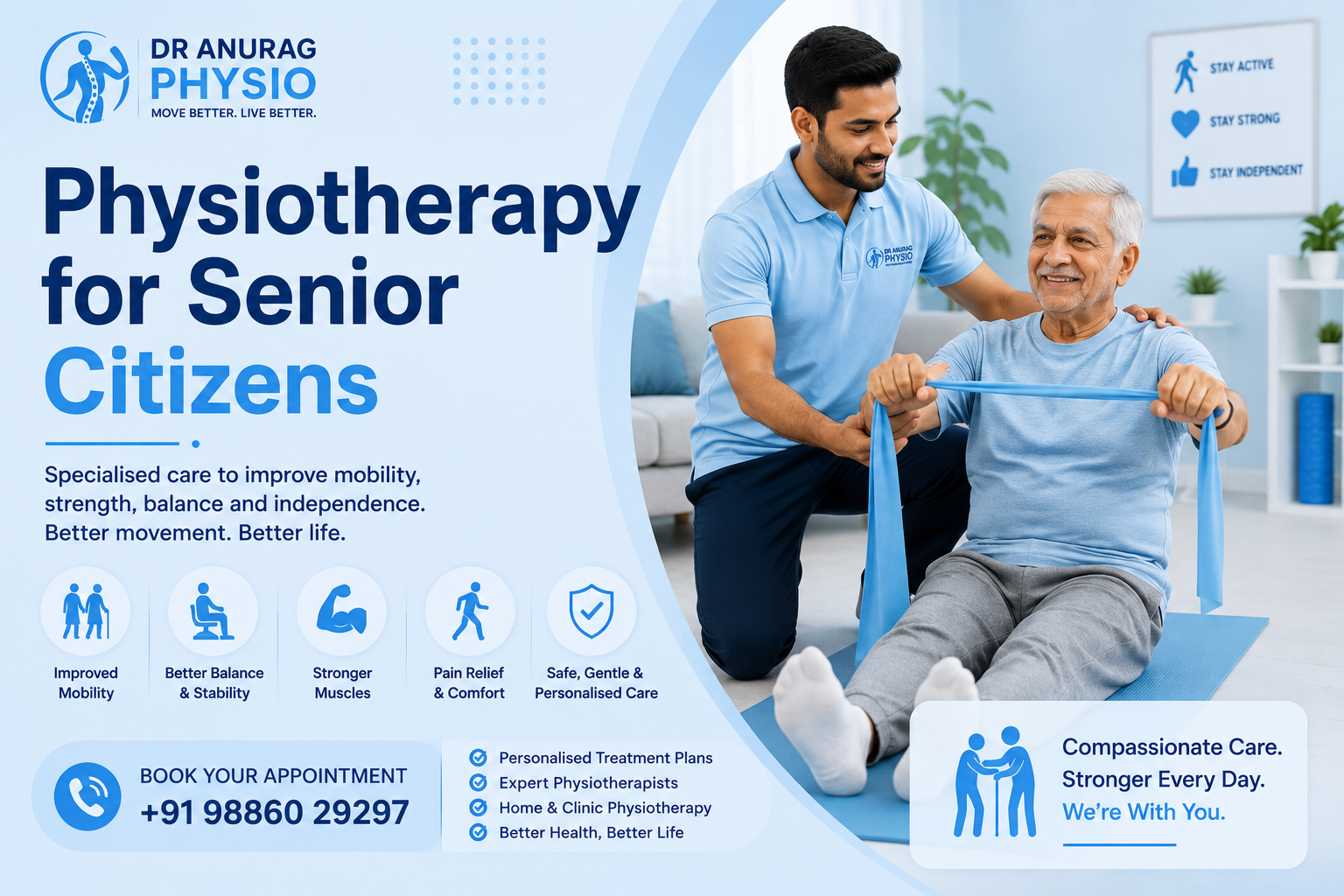
Another patient may want to:
Get back to walking outdoors after knee replacement.
The rehabilitation program should reflect the individual’s actual goals.
Why Choose Physiotherapy at Home for Senior Citizens?
Travelling to a clinic isn’t always convenient for an older adult.
Home physiotherapy for elderly Bangalore can be particularly practical when a person:
- Has difficulty walking
- Uses a walker or wheelchair
- Has recently undergone surgery
- Is recovering from a hospital stay
- Has significant weakness
- Has balance problems
- Has difficulty getting into a vehicle
- Needs family involvement in rehabilitation
Treatment can take place in the environment where many of the person’s daily activities actually occur.
Who Can Benefit From Senior Citizen Physiotherapy?
Senior citizen physiotherapy Bangalore may be appropriate for older adults experiencing physical limitations related to:
Joint Problems
- Knee osteoarthritis
- Hip arthritis
- Shoulder stiffness
- General joint stiffness
Post-Surgical Recovery
- Knee replacement
- Hip replacement
- Fracture surgery
- Other orthopedic procedures
Neurological Conditions
- Stroke-related mobility problems
- Parkinson’s-related movement difficulties
- Other neurological rehabilitation needs
Age-Related Weakness
- Reduced muscle strength
- Reduced endurance
- Physical deconditioning
- Reduced mobility
Balance Problems
- Difficulty maintaining balance
- Unsteadiness while walking
- Reduced confidence with movement
A clinical assessment helps determine whether home physiotherapy is appropriate.
Post Surgery Physiotherapy for Elderly Patients
Recovery after surgery can be challenging for an older adult.
Post surgery physiotherapy for elderly patients may focus on gradually restoring mobility while respecting the surgeon’s precautions.
Depending on the procedure, rehabilitation may address:
- Bed mobility
- Sitting balance
- Standing
- Transfers
- Walking
- Strength
- Joint movement
- Functional activities
- Return to everyday routines
The rehabilitation plan should consider the surgical procedure and the individual’s overall health.
Elderly Post Operative Physiotherapy
Elderly post operative physiotherapy should not follow a one-size-fits-all protocol.
An older adult may have additional considerations such as:
- Pre-existing joint problems
- Reduced muscle strength
- Balance impairment
- Reduced endurance
- Fear of falling
- Multiple medications
- Previous falls
- Other medical conditions
The physiotherapist should therefore adjust the exercise intensity, progression and environment according to the patient’s ability.
Physiotherapy After Knee Replacement for Elderly
Knee replacement is a common reason older adults require rehabilitation.
Physiotherapy after knee replacement for elderly patients may focus on:
Early Mobility
- Getting in and out of bed
- Standing
- Walking with an appropriate aid
- Basic functional movement
Knee Movement
The rehabilitation program may gradually work toward appropriate knee range of motion.
Strength
Exercises can target the muscles needed for:
- Standing
- Walking
- Transfers
- Stairs
Balance
Balance work may help the patient regain confidence with everyday movement.
Functional Independence
The ultimate objective is to help the patient return to meaningful daily activities safely.
Recovery varies considerably between individuals and should follow the surgeon’s and physiotherapist’s recommendations.
Home Physiotherapy for Elderly Patients After Knee Replacement
A home environment can be particularly useful during the early stages of recovery.
The physiotherapist can help the patient practise:
- Bed-to-chair transfers
- Walking through the home
- Bathroom mobility
- Sit-to-stand
- Stair practice where appropriate
- Prescribed exercises
The therapist can also identify environmental challenges that may affect safe movement.
Physiotherapy for Elderly Patients With Arthritis
Arthritis can cause pain, stiffness and reduced physical activity.
Physiotherapy may focus on:
- Maintaining appropriate joint movement
- Strengthening surrounding muscles
- Improving functional capacity
- Activity modification
- Mobility
- Exercise education
The objective is not to promise a cure for arthritis but to help the person manage functional limitations and remain as active as their condition allows.
Physiotherapy for Elderly Patients With Balance Problems
Balance difficulties can make everyday activities stressful.
An older adult may feel unstable while:
- Getting out of bed
- Standing from a chair
- Turning
- Walking to the bathroom
- Climbing stairs
- Walking outdoors
A physiotherapist can assess balance and develop appropriate exercises.
Training may progress from:
Supported standing → Weight shifting → Stepping → Turning → Functional mobility
The level of supervision should match the person’s fall risk.
Fall Prevention Physiotherapy for Seniors
Falls can have a major effect on an older person’s confidence and independence.
A physiotherapy assessment may examine:
- Leg strength
- Balance
- Walking pattern
- Transfers
- Footwear
- Use of walking aids
- Functional mobility
The home environment can also be reviewed for potential hazards.
Common considerations include:
- Loose rugs
- Poor lighting
- Clutter
- Slippery bathroom surfaces
- Difficult-to-access frequently used objects
Fall prevention should be individualised rather than based on a generic exercise list.
Mobility Training for Senior Citizens
Maintaining mobility is one of the most important goals of elderly rehabilitation.
Treatment may include:
Bed Mobility
Helping the patient move safely in bed.
Sit-to-Stand
Practising controlled movement between sitting and standing.
Walking
Progressive walking practice with an appropriate aid when required.
Stair Training
Where clinically appropriate, the patient may practise managing stairs.
Community Mobility
For suitable patients, rehabilitation can eventually focus on walking outside the home and navigating everyday environments.
Strength Training for Older Adults
Muscle strength can decline with inactivity and periods of illness or hospitalisation.
Appropriately prescribed strengthening may focus on muscles required for daily activities.
Examples can include exercises related to:
- Sitting and standing
- Walking
- Stair climbing
- Reaching
- Lifting appropriate objects
- Maintaining posture
Exercise intensity should be adapted to the person’s health, ability and goals.
Physiotherapy After Hospitalisation
Older adults may become physically weaker after a prolonged hospital stay.
This can lead to:
- Reduced endurance
- Difficulty standing
- Walking difficulties
- Muscle weakness
- Reduced confidence
- Increased dependence on family members
A rehabilitation program can focus on gradually rebuilding functional capacity.
The initial goal may be as simple as:
Bed → Chair → Standing → Walking
Over time, rehabilitation can progress toward greater independence.
Physiotherapy for Elderly Patients After a Fall
After a fall, the first priority is determining whether medical assessment is required.
Once serious injury has been ruled out, physiotherapy may help address:
- Strength
- Balance
- Walking
- Transfer technique
- Confidence
- Fall-risk factors
A recurrent fall history should be communicated to the patient’s healthcare provider.
Can Physiotherapy Help an Elderly Person Walk Better?
Physiotherapy can help address factors that affect walking, such as weakness, balance limitations, reduced coordination and deconditioning.
However, the expected outcome depends on the person’s underlying condition.
A physiotherapist can assess:
- Walking speed
- Balance
- Strength
- Gait pattern
- Endurance
- Need for a walking aid
The rehabilitation plan can then be built around realistic mobility goals.
Home Physiotherapy for Elderly Patients With Neurological Conditions
Some older adults require rehabilitation following neurological conditions such as stroke or Parkinson’s disease.
Treatment may include:
- Walking practice
- Balance training
- Transfer training
- Strengthening
- Functional movement
- Mobility exercises
For stroke-specific rehabilitation, link this page to the dedicated Stroke Rehabilitation Physiotherapy in Bangalore page.
This prevents keyword cannibalisation while building a stronger topical cluster.
What Happens During a Home Physiotherapy Visit?
A typical home visit may involve:
1. Initial Assessment
The physiotherapist discusses the patient’s history and current limitations.
2. Functional Assessment
Movement, walking, balance, strength and daily activities may be assessed.
3. Goal Setting
Goals are established around what the patient actually wants to achieve.
Examples:
- Walk independently
- Use stairs safely
- Get out of bed without assistance
- Return to household activities
4. Treatment
The physiotherapist provides appropriate exercises and movement training.
5. Home Exercise Program
The patient and caregiver may receive exercises and instructions for continued rehabilitation.
How Often Should an Elderly Patient Have Physiotherapy?
There is no universal number of sessions.
Frequency depends on:
- Condition
- Surgical procedure
- Mobility level
- Exercise tolerance
- Rehabilitation goals
- Progress
- Caregiver support
Some patients may need more frequent sessions during an early recovery period, while others may transition toward independent home exercises.
The plan should be reviewed as the patient progresses.
How Can Family Members Support Rehabilitation?
Family members can play an important role in elderly rehabilitation.
They can help by:
- Encouraging prescribed exercises
- Maintaining a consistent routine
- Creating a safe walking environment
- Supporting appropriate mobility
- Communicating changes to the healthcare team
- Attending sessions when appropriate
However, caregivers should not independently force movements or modify the rehabilitation program without professional guidance.
When Should an Elderly Person See a Physiotherapist?
Consider a physiotherapy assessment when an older adult develops:
- New difficulty walking
- Reduced strength
- Repeated falls
- Increasing difficulty with stairs
- Reduced mobility
- Difficulty getting up from a chair
- Loss of independence
- Stiffness after inactivity
- Difficulty recovering after surgery
- Reduced physical capacity after hospitalisation
Sudden severe weakness, new neurological symptoms, chest pain, severe breathlessness or suspected fractures require appropriate medical assessment rather than routine physiotherapy.
When Is Home Physiotherapy Not Enough?
Home physiotherapy may not be appropriate as the only intervention when a patient has an acute medical emergency, unstable medical condition or symptoms requiring urgent medical evaluation.
Examples include:
- Sudden neurological changes
- Severe chest pain
- Major breathing difficulty
- Suspected fracture
- Sudden unexplained severe pain
- Acute confusion
- Significant deterioration in health
In such situations, medical evaluation takes priority.
Physiotherapy for Elderly Bangalore: Choosing the Right Provider
When searching for physiotherapy for elderly Bangalore, consider more than convenience.
Look for a provider who offers:
- Individual assessment
- Geriatric rehabilitation
- Post-operative rehabilitation
- Mobility training
- Balance rehabilitation
- Strength training
- Fall-risk assessment
- Functional rehabilitation
- Home exercise guidance
- Caregiver education
For older adults, rehabilitation should be practical, progressive and centred on maintaining independence.
Why Choose Dr Anurag Physio?
Home-Based Rehabilitation
Physiotherapy for elderly at home Bangalore can be particularly useful for patients who find clinic travel difficult.
Dr Anurag Physio states that home physiotherapy is available within its service areas.
Individualised Treatment
Treatment is adapted according to the patient’s condition, current function and rehabilitation goals.
Book Appointment
Mobility & Functional Training
Home-based treatment can focus on practical activities such as walking, transfers, balance and strengthening.
Post-Surgical Rehabilitation
The practice provides physiotherapy services for patients recovering from orthopedic procedures, subject to individual assessment and surgical guidance.
Bangalore Locations
Dr Anurag Physio currently lists centres in Mahadevapura and Varthur, with home physiotherapy services in its stated service areas.
Phone: +91 91480 17070
Meet Dr Anurag Gupta
Dr Anurag Gupta
Lead Physiotherapist | Dr Anurag Physio
Dr Anurag Physio identifies Dr Anurag Gupta as its lead physiotherapist and provides physiotherapy services covering orthopedic, sports and rehabilitation needs.
For this senior-care page, the doctor’s specific geriatric qualifications, certifications or neurological specialisations should only be included if they are verified.
Practice: Dr Anurag Physio
Locations: Mahadevapura & Varthur, Bangalore
Phone: +91 91480 17070