
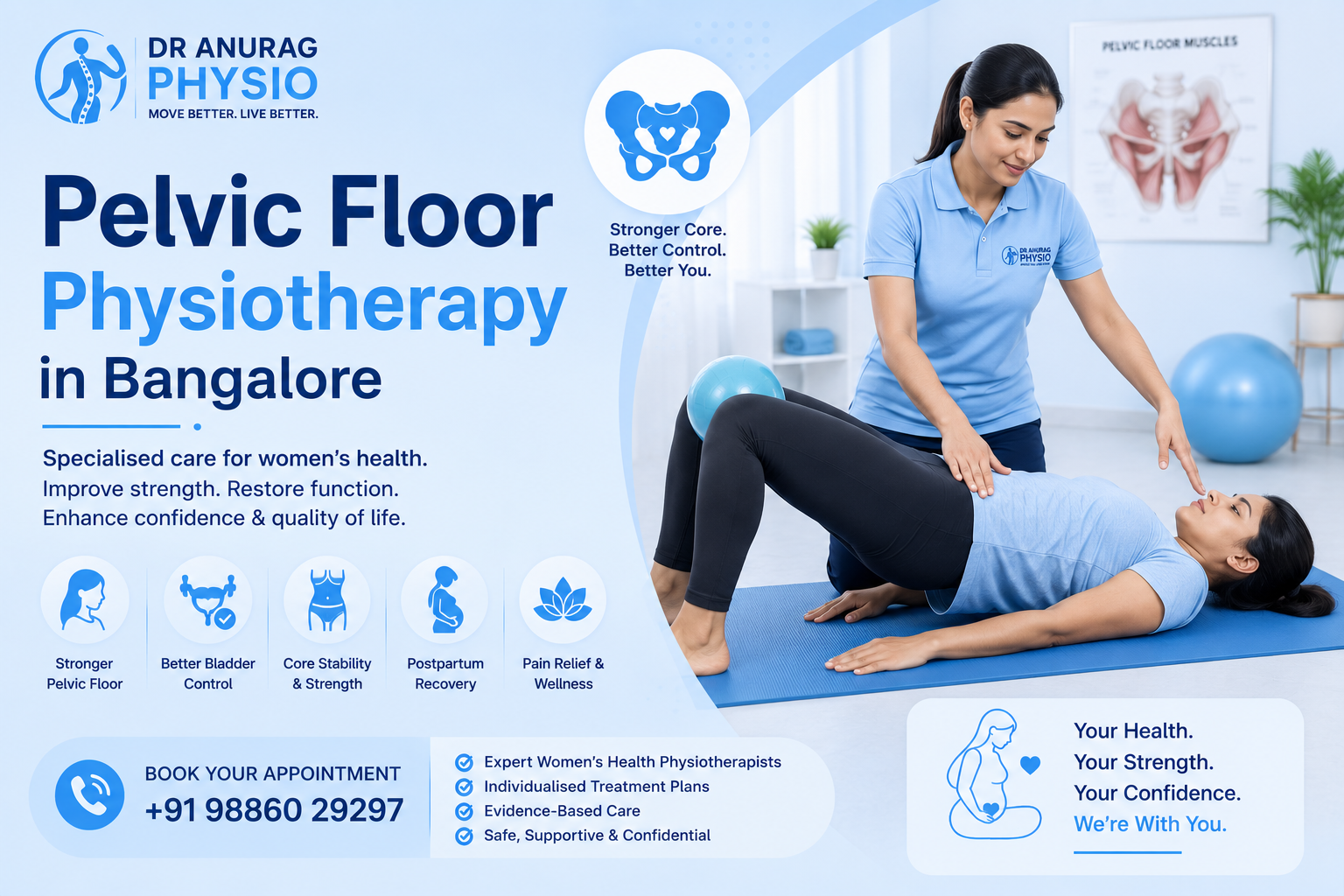
Pelvic-floor problems can affect everyday life in ways that aren’t always obvious.
You may notice urine leakage when coughing or exercising, pelvic discomfort, a feeling of heaviness, difficulty controlling bowel movements, pain during intimacy, or changes after pregnancy and childbirth.
You don’t have to simply accept these symptoms as a normal part of ageing, pregnancy or recovery.
Pelvic floor physiotherapy involves assessment and rehabilitation of the muscles and related structures that support pelvic function. Treatment is tailored to the person’s symptoms, physical findings and goals.
At Dr Anurag Physio, physiotherapy is approached on an individual basis, with treatment focused on functional recovery and appropriate exercise progression.
Book Appointment
What Is Pelvic Floor Physiotherapy?
The pelvic floor is a group of muscles and connective tissues located at the base of the pelvis.
These structures contribute to:
- Bladder control
- Bowel control
- Pelvic support
- Sexual function
- Core and trunk function
Pelvic floor physiotherapy aims to assess and address problems involving pelvic-floor muscle function and associated movement patterns.
Depending on the person’s needs, rehabilitation may involve:
- Pelvic-floor muscle training
- Relaxation strategies
- Breathing coordination
- Core rehabilitation
- Functional movement
- Strengthening
- Mobility exercises
- Education
- Activity modification
Treatment isn’t always about strengthening.
Some people have muscles that are weak, while others may have excessive muscle tension or difficulty relaxing. The appropriate approach depends on assessment.
Who Can Benefit From Pelvic Floor Physiotherapy?
A pelvic floor physiotherapist may assess people experiencing:
Bladder Symptoms
- Urinary leakage
- Leakage during coughing or sneezing
- Leakage during exercise
- Increased urinary urgency
- Difficulty controlling urination
Bowel Symptoms
- Difficulty controlling bowel movements
- Bowel urgency
- Functional problems related to pelvic-floor coordination
Pelvic Pain
- Pelvic discomfort
- Tailbone pain
- Pain associated with pelvic-floor muscle tension
- Certain forms of chronic pelvic pain
Pregnancy and Postpartum Changes
- Pelvic-floor weakness
- Urinary leakage after childbirth
- Postpartum pelvic discomfort
- Core weakness
- Diastasis recti-related functional concerns
Other Conditions
- Pelvic organ prolapse symptoms
- Recovery following appropriate pelvic or abdominal procedures
- Pelvic-floor dysfunction associated with certain medical conditions
A clinical assessment is important because symptoms can have multiple causes.
How Does the Pelvic Floor Work?
Understanding the pelvic floor can make rehabilitation easier to understand.
The pelvic floor works together with the:
- Diaphragm
- Abdominal muscles
- Back muscles
- Hip muscles
These structures contribute to pressure management and trunk stability.
For example, activities such as:
Coughing → Sneezing → Lifting → Running → Jumping
can increase pressure through the abdomen.
Good coordination between breathing, trunk muscles and pelvic-floor muscles can help the body respond appropriately to these demands.
Pelvic Floor Physiotherapy for Women
Pelvic floor physiotherapy for women may be useful during different stages of life.
Pregnancy
Pregnancy can place increased physical demands on the pelvic floor.
Physiotherapy may focus on:
- Pelvic-floor awareness
- Appropriate strengthening
- Relaxation
- Breathing
- Pelvic and back discomfort
- Functional movement
After Childbirth
Some women experience pelvic-floor symptoms following vaginal or C-section delivery.
Rehabilitation may address:
- Urinary leakage
- Pelvic discomfort
- Core function
- Abdominal wall changes
- Return to exercise
For comprehensive postpartum information, link this page to:
Postpartum Physiotherapy in Bangalore
Menopause
Hormonal changes during menopause can be associated with changes in pelvic-floor and urinary symptoms.
Assessment can help determine whether pelvic-floor rehabilitation may be appropriate.
Pelvic Floor Physiotherapy for Urinary Leakage
Urinary leakage can happen during:
- Coughing
- Sneezing
- Laughing
- Running
- Jumping
- Lifting
- Exercise
This is sometimes referred to as stress urinary incontinence.
Other people experience a strong or sudden urge to urinate.
Pelvic-floor physiotherapy may help selected patients by addressing:
- Muscle strength
- Muscle coordination
- Pressure management
- Bladder habits
- Functional movement
- Exercise-related symptoms
However, urinary symptoms shouldn’t automatically be assumed to be caused by weak pelvic-floor muscles.
An appropriate assessment is important.
Pelvic Floor Rehabilitation for Pelvic Organ Prolapse
Pelvic organ prolapse occurs when pelvic organs descend toward or into the vaginal canal due to changes in supporting tissues.
Symptoms can include:
- Pelvic heaviness
- Pressure
- A sensation of bulging
- Difficulty with certain activities
Pelvic floor rehabilitation Bangalore may form part of conservative management for some women.
Treatment can include:
- Pelvic-floor muscle training
- Functional movement strategies
- Load management
- Breathing coordination
- Education
Physiotherapy does not replace medical evaluation, particularly when symptoms are new, severe or progressing.
Pelvic Floor Physiotherapy for Pelvic Pain
Pelvic pain can have many causes.
It may involve:
- Muscles
- Joints
- Nerves
- Pelvic organs
- Scar tissue
- Other medical conditions
Physiotherapy may be appropriate when musculoskeletal or pelvic-floor dysfunction contributes to symptoms.
Treatment may involve:
- Movement assessment
- Relaxation techniques
- Breathing strategies
- Mobility
- Gentle strengthening
- Functional rehabilitation
A physiotherapist should not assume that all pelvic pain is a physiotherapy problem.
Pelvic Floor Therapy for Tailbone Pain
The tailbone, or coccyx, can become painful following:
- Pregnancy
- Childbirth
- Falls
- Prolonged sitting
- Certain movement patterns
A physiotherapist can assess the surrounding muscles, movement patterns and functional factors.
Treatment may include appropriate mobility work, strengthening, activity modification and pelvic-floor rehabilitation where clinically indicated.
Persistent or unexplained tailbone pain should be medically evaluated.
Pelvic Floor Physiotherapy During Pregnancy
Pregnancy can affect:
- Pelvic-floor function
- Posture
- Abdominal wall function
- Pelvic stability
- Bladder control
- Lower-back and pelvic comfort
A pregnancy-specific physiotherapy program may focus on maintaining comfortable movement and preparing for functional demands.
Treatment should be adapted to the stage of pregnancy and any medical or obstetric restrictions.
Postpartum Pelvic Floor Rehabilitation
Childbirth can affect pelvic-floor muscle function.
Some women may experience:
- Urinary leakage
- Pelvic heaviness
- Difficulty returning to exercise
- Pelvic discomfort
- Core weakness
Pelvic floor physiotherapy for women can be incorporated into postpartum rehabilitation when appropriate.
A typical rehabilitation pathway may involve:
Assessment → Awareness → Coordination → Strength → Functional Loading → Return to Activity
For detailed postpartum recovery, see:
Postpartum Physiotherapy in Bangalore
Diastasis Recti and Pelvic Floor Rehabilitation
Diastasis recti refers to changes in the linea alba and separation between the abdominal muscles that can occur during pregnancy.
It isn’t simply a cosmetic issue.
Some women may experience changes in:
- Abdominal tension
- Trunk control
- Load management
- Exercise tolerance
Physiotherapy can assess abdominal function and determine an appropriate rehabilitation strategy.
Treatment may include:
- Breathing coordination
- Trunk control
- Progressive strengthening
- Functional movement
- Load management
Avoid assuming that a visible abdominal gap automatically means you need intensive abdominal exercises.
Pelvic Floor Therapy for Men
Pelvic-floor rehabilitation isn’t only for women.
Men may also experience pelvic-floor dysfunction associated with certain conditions.
Potential concerns include:
- Urinary leakage
- Pelvic pain
- Pelvic-floor muscle tension
- Functional problems after prostate procedures
A pelvic floor physiotherapist can determine whether physiotherapy is appropriate and whether medical referral is needed.
For men recovering after prostate surgery, rehabilitation should be coordinated with the treating medical team.
Pelvic Floor Physiotherapy After Surgery
Certain pelvic or abdominal procedures may require rehabilitation.
The physiotherapy plan depends on:
- Type of surgery
- Healing stage
- Medical restrictions
- Symptoms
- Functional goals
Rehabilitation may focus on:
- Mobility
- Breathing
- Scar-related movement where appropriate
- Strength
- Pelvic-floor function
- Return to daily activities
Do not begin intensive pelvic-floor exercises immediately after surgery without appropriate medical guidance.
What Happens During a Pelvic Floor Physiotherapy Assessment?
Many people feel uncertain about their first appointment.
A good assessment should begin with a conversation.
1. Medical & Symptom History
The physiotherapist may ask about:
- Your symptoms
- Pregnancy and childbirth history
- Previous surgery
- Bladder or bowel symptoms
- Physical activity
- Pain
- Your goals
2. Movement Assessment
Depending on the symptoms, the therapist may assess:
- Posture
- Breathing
- Core control
- Hip movement
- Functional movement
- Strength
3. Pelvic-Floor Assessment
If clinically appropriate and with informed consent, a more specific pelvic-floor assessment may be discussed.
You should understand what is being assessed and why.
4. Treatment Plan
Your rehabilitation plan should be based on the findings rather than a generic exercise list.
Do Pelvic Floor Exercises Work for Everyone?
No.
This is one of the most important points to understand.
Pelvic-floor problems can involve:
- Weakness
- Poor coordination
- Excessive muscle tension
- Difficulty relaxing
- Pain
- Multiple contributing factors
Therefore, repeatedly performing strengthening exercises without assessment may not be appropriate for everyone.
A pelvic floor physiotherapist can determine whether strengthening, relaxation, coordination training or another approach is more suitable.
How Long Does Pelvic Floor Physiotherapy Take?
There isn’t a fixed treatment duration.
It depends on:
- The underlying problem
- Symptom severity
- Duration of symptoms
- Functional goals
- Response to treatment
- Ability to follow the home program
Some people may notice changes relatively quickly, while longer-standing or complex problems may require a more gradual rehabilitation program.
Treatment should be reviewed according to progress rather than promising a fixed recovery time.
Can Pelvic Floor Therapy Be Done at Home?
Some components of rehabilitation can be performed at home.
A home program may include:
- Breathing exercises
- Pelvic-floor exercises
- Relaxation
- Mobility
- Core strengthening
- Functional exercises
However, the exercises should be appropriate for your specific condition.
If you are searching for pelvic floor therapy near me, ask the provider whether assessment and home-based treatment are available.
When Should You See a Doctor?
Physiotherapy isn’t a substitute for medical diagnosis.
Seek appropriate medical evaluation for:
- Blood in urine or stool
- Unexplained vaginal bleeding
- New pelvic masses or bulging
- Severe or unexplained pelvic pain
- Fever
- Sudden neurological symptoms
- Significant unexplained weight loss
- New bowel or bladder changes that concern you
A physiotherapist can also recommend referral when symptoms fall outside the appropriate scope of physiotherapy.
Finding a Pelvic Floor Physiotherapist in Bangalore
When searching for pelvic floor physiotherapy near me, consider:
1. Appropriate Qualifications
Check the physiotherapist’s education and professional credentials.
2. Relevant Experience
Ask whether the clinician has experience with your specific concern.
3. Assessment-Based Care
Treatment should begin with an appropriate evaluation rather than a generic exercise sheet.
4. Privacy & Consent
Pelvic-floor rehabilitation can involve sensitive discussions and, when clinically appropriate, physical assessment. You should be informed about the process and provide consent.
5. Referral Network
A good healthcare provider should recognise when a patient needs medical evaluation.
Why Choose Dr Anurag Physio?
Dr Anurag Physio provides physiotherapy services in Bangalore with an emphasis on assessment-based and individualised rehabilitation.
For appropriate patients, treatment can focus on:
- Movement
- Strength
- Mobility
- Core function
- Functional rehabilitation
- Exercise progression
Patient-Centred Assessment
Your symptoms and goals should guide rehabilitation rather than a one-size-fits-all protocol.
Functional Rehabilitation
Treatment can focus on improving the activities that matter to you.
Book Appointment
Meet Dr Anurag Gupta
Dr Anurag Gupta
Lead Physiotherapist | Dr Anurag Physio
Dr Anurag Physio identifies Dr Anurag Gupta as its lead physiotherapist.
For this pelvic-health page, any specific claim that Dr Anurag is a pelvic-health or women’s-health specialist should be published only after verifying the relevant qualifications, training and clinical experience.
Recommended profile information to verify and display:
- Physiotherapy qualification
- Professional registration
- Clinical experience
- Relevant pelvic-health training
- Women’s-health certifications, if applicable
- Professional memberships
- Areas of clinical practice
Practice: Dr Anurag Physio
Locations: Mahadevapura & Varthur, Bangalore
Phone: +91 91480 17070